How Do You Improve Supply Chain Resiliency?
What is your company’s door handle cover?

2020 has resurfaced how important Supply Chain Resiliency is and how an event like COVID-19 can impact companies all around the world, both across their logistics and their credit risk.
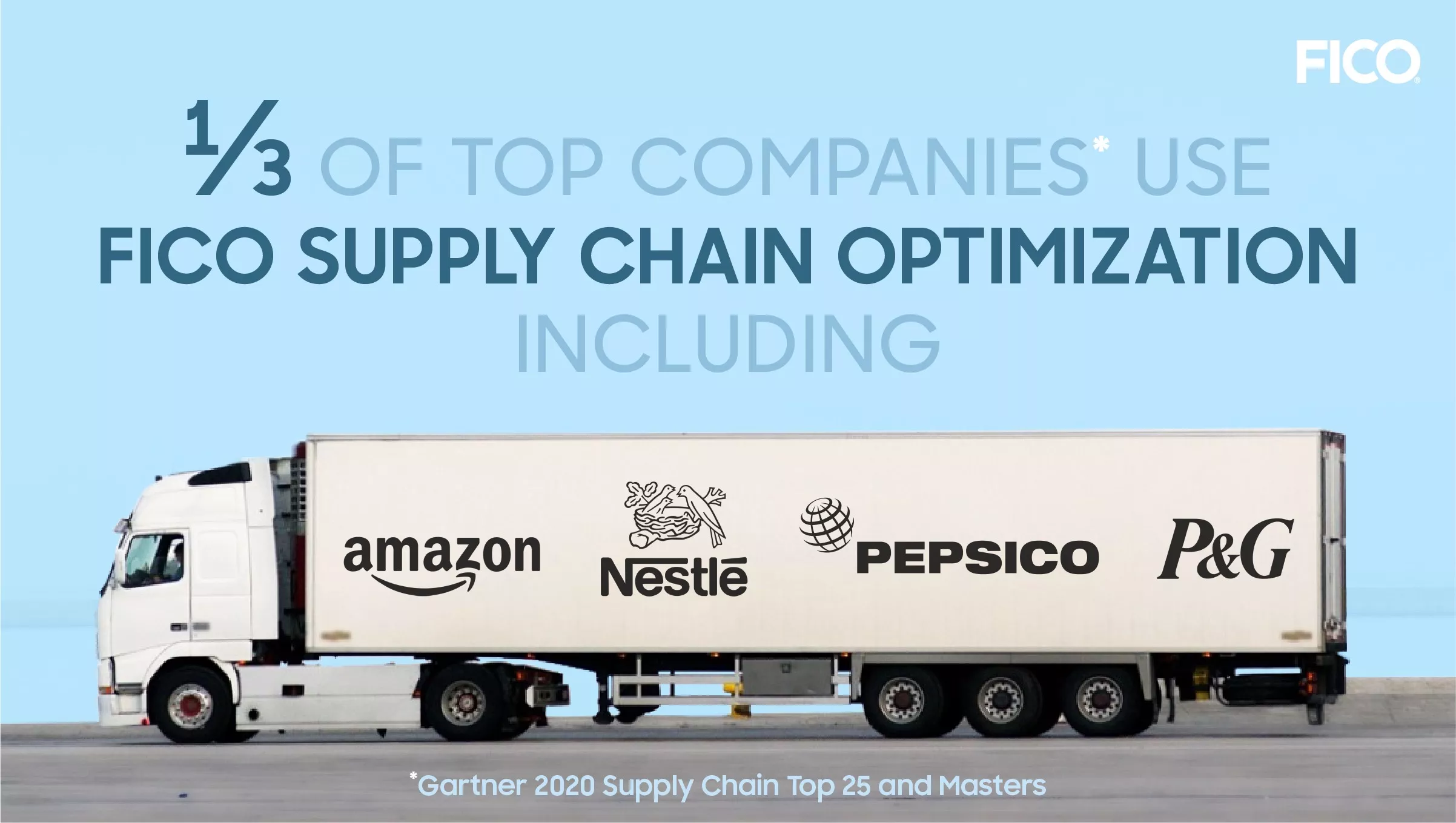
Fortunately, at FICO we have the privilege of working with leaders in global supply chains. We have over the years helped them to develop new approaches to creating resilience, we have helped them become leaders, and they have helped us understand what it takes to deliver value from analytics and optimisation in practice. In fact, many of the cream of the crop within the recent Gartner 2020 Supply Chain Top 25 report are actually FICO Xpress customers, including companies like Amazon, Nestle, Pepsico and P&G.
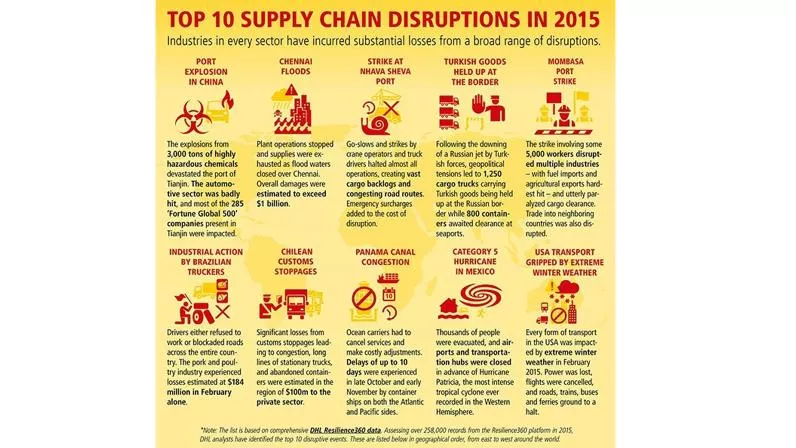
All of these firms have a plan in place to deal with usual disruptions like natural disasters, strikes, political instability, price shocks and so on, (like the examples below in 2015), however, almost nobody puts plans in place for a once in one hundred years pandemic of this scale. And to be clear: no one outside public health supply chains should build sufficient resiliency to survive the next global pandemic – that would be uneconomical during the other 99 years or so between events of the magnitude of the one we are experiencing now.
However, the advanced approaches and technologies used by these top companies did mean they knew how to pivot and address the situation the best they possibly could. For others, the experience of 2020 has now forced a rethink for many to once again take a closer look at supply chain resiliency and at how to address everything from trade flows, to warehousing, to credit risk and managing the anxiety of operations teams on the front line. Let's take a look at what is required.
Supply Chain Resiliency – Only As Good As The Weakest Point
Just as the pandemic was starting my father-in-law bought a new car. The arrival of the car in that context reminded me of work that Professor David Simchi-Levi did with Ford Motor Company on supply chain resiliency, which earned him a Wagner Prize in 2014. That work showed that it isn’t necessarily the most obvious, complex, or expensive components of your supply chain that test your ability to continue operating. Here I was, staring at this new car and asking myself: Imagine if the cover of the door handle was missing? Who would accept their new car, as amazing as it might be, if this piece, this tiny plastic piece was missing?
A more direct first-hand experience: I was once asked to optimize the scheduling of a sophisticated consumer goods manufacturing plant. Talking to the managers, we found that they would frequently run out of the plastic wrap required to pack boxes of finished product onto pallets, which would cause portions of the plant to slow down or stop.
It was clear that David’s submission was insightful in a rare and powerful way. Even though both my team and the team of a former student were finalists that year, I had no qualms congratulating him on the well-deserved win even before the prize was announced!
The concepts he presented caught some attention beyond the academic community. However, after some initial hype back in 2014, I was disappointed that the interest in supply chain resiliency seemed to wane after a while. And then 2020 happened. As the pandemic took hold, container ships got parked, factories across the world shut down and demand fell off a cliff to settle in a new and still unclear steady state. The entire business world was suddenly interested in resilient supply chains again.
So, what should companies be thinking about and how can they use technology to help them with some of these challenges?
Supply Chain Resiliency – Recovery, Discovery, and Resiliency
My global colleagues at FICO, led by Zahir Balaporia, who specialize in supply chains and together have more than 100 years of commercial supply chain experience, wanted to help by putting forward their response. The resulting heuristic approach allows supply chain executives to frame their response going forward around three pillars: Recovery, Discovery, and Resiliency.
Within that framework we combined a compilation of the best academic thinking available with original ideas to create a set of principles that help our customers design and operate supply chains that are more resilient when extraordinary disruptions happen. If you are interested in viewing the resulting webinar, you can do so here:
However, let me summarize some of the highlights for you as well.
- Recovery is where we still are now, in mid-2020.
- The winning strategy will be: all hands on deck, keeping it simple. None of us has seen this in our lifetime, nor have our models. Rather than machine learning, scenario building will be key to survival.
- Leaders will: use descriptive summaries of the dynamic state of the network to empower experts to build a handful of explainable scenarios that will drive decision-making.
- Discovery is where the leaders will be sometime later this year.
- The winning strategy will be: understand and exploit the data from the natural experiments that have emerged as a result of this tragedy.
- Leaders will: develop a more precise understanding of their entire supply chain network. That understanding will enable them to engineer an efficient new normal, whatever it may be. That efficiency, especially in retail and transportation, will become a strategic asset that will define the industry, potentially for a generation.
- Resiliency will come later, sometime in mid-2021, and will become a permanent fixture of the supply chain.
- The winning strategy will be: use the outcomes of the discovery phase to produce a supply chain that is more robust and resilient to the extraordinary but not catastrophic shocks we are likely to experience from time to time.
- Leaders will: have a real-time strategic map of their supply chain network, which they will stress-test using scenarios; demand more transparency from their suppliers, and share risk and resiliency with their customers; use that understanding as a lever to reduce their cost of capital. The ROI will come not only from efficiency in the operations themselves but also from cost of capital and stability gains throughout the enterprise.
- It is possible to increase resiliency without increasing operating costs.
- The winning strategy will be: to improve the mapping and monitoring of the supply chain. There is no free lunch – if it were easy to make supply chains resilient, they would already be so. People are smart. The reason resiliency hasn’t been front-of-mind is that it requires more sophistication. Now we understand that resiliency is worth more than we thought, so the extra sophistication becomes worthwhile. The cost of operating the supply chain does not have to increase, but the productivity of the chain must increase to support more resiliency at the same cost.
- Leaders will: replace tedious calls between demand planners begging for inventory with automated, scenario-based allocation, more refined inventory policies, more responsive forecasting, better markdown, risk-sharing between suppliers and customers, and other risk mitigation mechanisms
- While there are some tough times ahead, there will also be short-term and long-term winners.
- The winning strategy will be: to work with your financial institutions early on, to clarify your supply-chain risk positioning and negotiate risk-sharing and mitigation mechanisms with both suppliers and customers.
- Leaders will: come to the table prepared. Financial institutions will understand the supply chain risk associated with each customer and sector. For example, my APAC colleague Sherine John recently completed an analysis for one of our customers quantifying the impact that the fortunes of each sector would have on that customer’s loan book and predicting the impact that that sector’s fortune would have on each SME customer’s risk profile. That bank can now use that information to ask more precise questions of their customers in each sector, both SME and institutional, and make difficult decisions regarding loan modifications with better information and understanding. The leaders among those customers will also benefit from preparing answers to those questions in advance of those difficult meetings.
So in 2020, while we are all saddened by the tragedies that so many of us are experiencing this year, and by the economic consequences we are all living with, we see a brighter future ahead.
We have full confidence that the extra visibility provided by analytics and optimisation will help businesses build more efficient and more resilient supply chains going forward, and that our financial services customers will have the visibility required to enable innovators to deliver a brighter future quickly while retaining the stability required for continued progress.

Popular Posts

Average U.S. FICO® Score at 716, Indicating Improvement in Consumer Credit Behaviors Despite Pandemic
The FICO Score is a broad-based, independent standard measure of credit risk
Read more
The GSE Data Is Public. Here's What It Shows About Credit Score Modernization.
Independent Milliman analysis of GSE historical data confirms what anyone can now verify directly: FICO® Score 10T is the most predictive score.
Read more
FICO® Score High Achievers: Is Age the Only Factor?
<p>FICO’s latest research on <a href="http://www.fico.com/en/blogs/risk-compliance/us-credit-quality-rising-the-beat-goes-on/" target="_blank">national FICO® Score distribution</a> shows that US credit quality continues to trend upwards, with an increasing number of consumers scoring in the highest scores ranges. Given that, we decided it was time to refresh our study on “<a href="http://www.fico.com/en/blogs/risk-compliance/infographic-what-does-a-high-credit-scorer-look-like/" target="_blank">FICO® Score high achievers</a>,” where we examine the credit behavioural profiles of consumers with higher credit scores.</p> <p>As expected, our latest study showed that older people generally have higher scores, as has been the case in our <a href="http://www.fico.com/en/blogs/risk-compliance/age-before-beauty-credit-worthiness-before-youth/" target="_blank">past research</a>. This is largely because they have trade lines that have been open longer, which leads to higher scores (assuming the trade lines are in good standing and all other things equal). The most credit savvy among you will remember that length of credit history accounts for roughly 15% of the overall <a href="http://www.myfico.com/CreditEducation/WhatsInYourScore.aspx" target="_blank">FICO® Score calculation</a>.</p> <p>But for younger consumers, it isn’t too helpful to say, “just wait until you are 50 years old, and that will fix things!” Thus, I decided to dive deeper with our analysis, including looking at the credit behavioural characteristics of younger consumers with high FICO® Scores.</p> <p>In this analysis, I looked at credit characteristics for the two highest score bands, 750-799 and 800-850, which have about 16% and 23% of the population, respectively. I further broke this down by looking at the characteristics of the youngest 15% in each group, which occurs at age 29 for the 750-799 group and 43 for the 800-850. We used FICO<strong>®</strong> Score 9 for our analysis, and examined typical variables of the categories that go into the make-up of the score.</p> <p><a href="http://www.fico.com/en/blogs/wp-content/uploads/2016/10/FICO-Score-High-Achiever-table.png"><img class="alignnone size-full wp-image-29367" src="http://www.fico.com/en/blogs/wp-content/uploads/2016/10/FICO-Score-High-Achiever-table.png" alt="fico-score-high-achiever-table" width="715" height="747" /></a></p> <p>Since there’s a lot to dissect in this chart, I’ll highlight a few findings that struck me: <ul> <li><strong>Credit history.</strong> Higher scores are undoubtedly associated with a longer time on file. What’s striking is the higher average time on file for the 800+ group, both overall and for revolving accounts (the most common trade line). Clearly, it helps to start credit use early in life – but that’s not the sole determining factor for high scoring. The younger cohorts in both the 800+ and 750-799 groups have time on file medians significantly less than their older counterparts.</li> <li><strong>New credit.</strong> High credit scorers do, in fact, pursue new credit. We see little variation in months since last trade line opening and last inquiry among all groups observed.</li> <li><strong>Pay on time.</strong> As you might expect, the further in the past the delinquency, the higher the score – and that’s <u>if</u> a delinquency ever happened. 95% of the 800+ people and 72% of the 750-799 group have never been delinquent, which is a striking contrast to the 57% for the total population. The percentages for the younger groups are even higher, especially so for the 750-799ers. Collection items are also scarce for these high scorers. While 23% of the national population have collection items greater than $99, the figures are only 0.5% for the 800+ group and 3% for the 750-799 group. It is clear that, in conjunction with starting a credit file early, paying on time is a key trait of the FICO® Score high achiever.</li> <li><strong>Balance and utilization.</strong> Finally, we look at how credit is being used, focusing on revolving product use. (Since most people only have one mortgage or one auto loan, variation in instalment product figures is minimal and driven by payment history, which is near perfect for high scorers, as we’ve seen.) FICO® Score high achievers tend to have more open revolving accounts. While the % active trades and utilization are generally lower, by no means do high scorers avoid the use of credit products. What drives the difference here is the amount of <u>available</u> revolving credit utilized. The 800+ group is roughly 1/4 of the national median, both in total and on their highest utilized card; they also have lower balances and more cards<em>. </em>The 750-799 group is more active and higher utilized, but still only at 2/3 of the national figures. The young 750-799 group compensate with lower revolving balances and, as a result, lower utilization, which is in line with what we see for the 800+ group.</li> <li><strong>Benchmarks.</strong> I’d like to point out that while this study provides good benchmarks of the typical credit traits of the FICO® Score high achiever, individual credit profiles will vary widely. And keep in mind that when we sort groups of consumers as a whole by different behaviours, some results may look superficially odd. For example, the 800+ band has a longer median average open account time (128 months) than average revolving months on file (140 months).</li> </ul> So, what do we conclude? A huge takeaway is that high scorers don’t have too much in the way of serious delinquencies and negative public record data.</p> <p>In most respects, the young 800+ people are like their peer group. They really only differ markedly in their shorter credit history and higher non-mortgage balance, both of which are a function of life stage. Our results show that you don’t have to be a credit product hermit; these high scorers have more credit cards. The takeaway is to start credit activity early and maintain well-managed and moderate usage.</p> <p>In many ways, the young 750-799 people are more interesting because their age profile is much younger. Their credit characteristics differ more from their peer group, particularly in terms of length of credit history. They compensate by having almost pristine credit records and lower balances.</p> <p>Ultimately, 39% of US consumers are FICO® Score high achievers, which they accomplish by following common-sense credit practices. It ain’t rocket science!</p>
Read moreTake the next step
Connect with FICO for answers to all your product and solution questions. Interested in becoming a business partner? Contact us to learn more. We look forward to hearing from you.