Leveraging Alternative Data to Extend Credit to More Borrowers
You may have heard that alternative data holds great potential for expanding access to credit to more consumers to help them achieve their financial goals. Indeed, more data can en…

You may have heard that alternative data holds great potential for expanding access to credit to more consumers to help them achieve their financial goals. Indeed, more data can enable credit score providers like FICO to provide a more complete snapshot of consumers’ credit behavior and potential risk. While FICO has been the leader in developing innovative ways to incorporate new and regulatory compliant alternative data into credit scores, there are still barriers to fully unlocking the potential of alternative data.
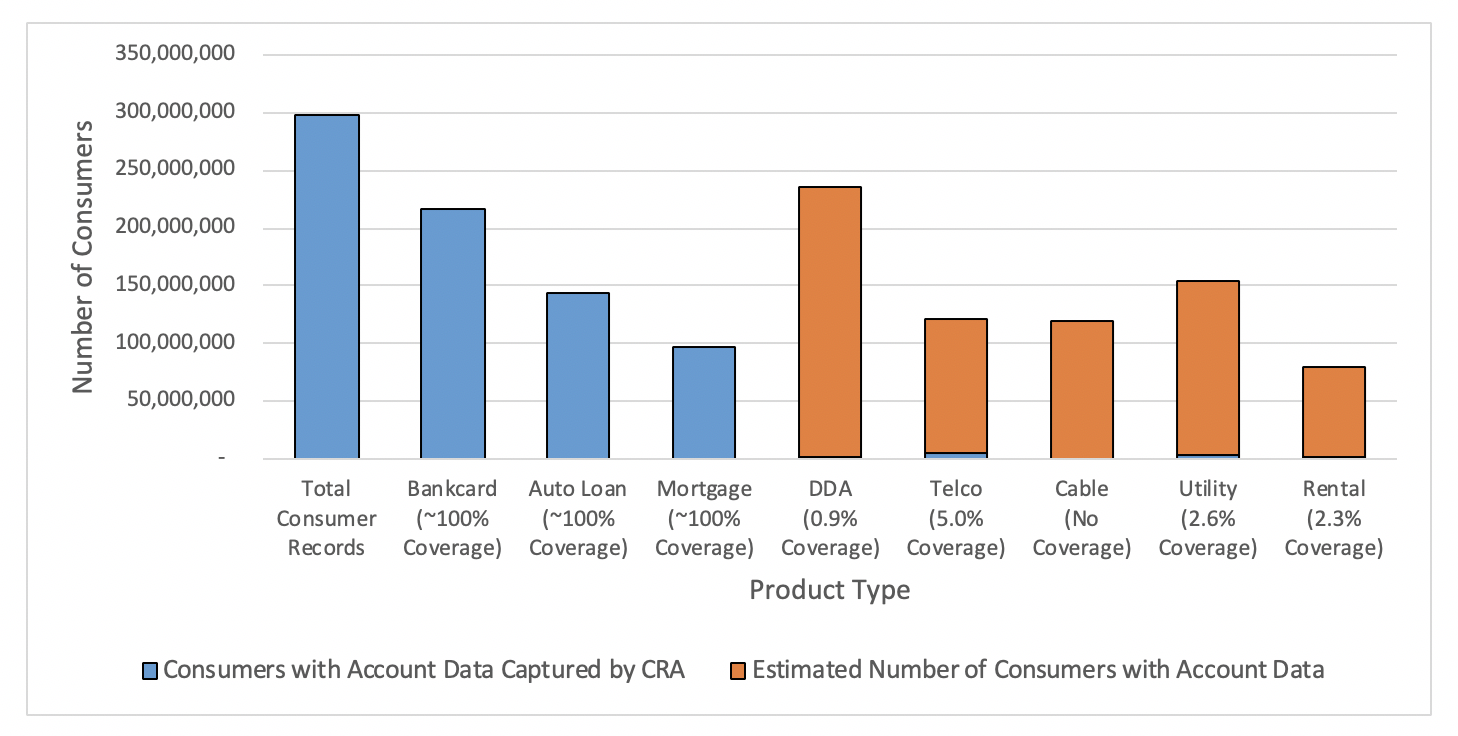
Due to the confusion around this issue, it’s important to be clear about what constitutes alternative data. In our view, for data to be considered “alternative data”, it means that the data is not part of the traditional consumer credit files maintained by the three largest credit bureaus (Equifax, Experian and TransUnion). The credit bureaus do maintain utility, cell phone and/or rental data and the FICO® Score has used this data for many years. The problem is that this type of data in traditional credit files is sparse, with utility data present for just 2.6 percent of consumers and cell phone bill data for just 5 percent of consumers. Instead, to reliably increase credit access, scoring must look beyond the traditional bureau files to include alternative data.
In the U.S., roughly 28 million consumers have insufficient data in their credit bureau file to meet the minimum criteria for calculating a FICO® Score (at least one credit account open for six months or more, and at least one accounted reported to the credit bureau within the past six months). Another 25 million consumers have no credit bureau file at all. But just because someone doesn’t have a FICO® Score, it doesn’t mean they’re not credit ready. Instead, innovative analytic firms such as FICO are investing in identifying new predictive and compliant data sources to build models that accurately assess if underserved borrowers are in a position to successfully take on a new credit obligation. Gathering and analyzing these new forms of data to build new credit scoring models allows lenders to make better decisions and extend credit to these consumers within their credit risk guidelines.
FICO is a longtime leader in incorporating available data into our credit scoring models. Telecommunications and utility data have been included in the FICO® Score formula since the first model was released in 1989, while rental data is incorporated into more recent models like FICO® Score 9. We’re also pioneering the use of new forms of data, alternative data: With FICO® Score XD, which takes into account positive and negative telecommunications and utilities data and public record information not available in traditional credit files, millions of U.S. consumers with sparse or no traditional credit files can now be scored reliably and have the opportunity to receive offers of credit.
The promise of these new data sources points to the primary barrier to incorporating telecommunications, utility and rental payment data into broad based credit scoring models: the limited availability of that data in traditional credit bureau files. In the U.S., 92 percent of consumers have cell phones, but just 5 percent of consumers have telco data in their traditional credit bureau files. The story is similar for rental payments: of the roughly 80 million U.S. adults who live in rental housing, just 1.8 million (2.3 percent) have a rental trade line reported in their traditional credit file.
For these types of accounts, furnishing the data to the credit bureaus is voluntary and comes with significant responsibilities and hurdles. Thus, the best way to truly increase the use of alternative data is to make sure that the data is accessible to third-party analytic firms, like FICO, to assure a competitive market. Incorporating new forms of data into a credit score also requires that the data be accessible, a good predictor of credit behavior and compliant with all laws governing consumer credit evaluation. For newer forms of data, FICO uses a six-point test to determine whether the data is worthy of inclusion in a FICO® Score model.
To be more inclusive and meet the demand for greater access to credit for worthy consumers, FICO is making considerable investments in exploring new data sets and model development, including through the use of checking, savings or money market account data contributed by consumers to enhance the predictiveness of their score based on proven indicators of sound financial behavior. Note that demand deposit account (DDA) data such as this is estimated to exist for nearly 250 million Americans, but is found in less than 1 percent of traditional credit bureau files. Our testing has found that as many as 15 million U.S. consumers without sufficient credit history to generate a FICO® Score can now be scored reliably through the use of this DDA data.
Alternative data holds tremendous potential to responsibly expand access to credit. But it’s not simply a matter of flipping a switch and having readily available data suddenly incorporated into a credit score. Considerable resources go into establishing a reliable supply of consumer behavior data and ensuring the data is compliant, accurate, unbiased and predictive of credit risk. Introducing new data has a real impact on a consumer’s credit profile, so we must diligently test the new data’s impact on credit scoring models.
As the independent standard in credit scoring, FICO has been a longtime leader in leveraging innovations in scoring to responsibly expand access to credit, and we will continue to advocate for solutions that both help more Americans responsibly access credit and preserve the safety and soundness of our lending system.

Popular Posts

Average U.S. FICO® Score at 716, Indicating Improvement in Consumer Credit Behaviors Despite Pandemic
The FICO Score is a broad-based, independent standard measure of credit risk
Read more
The GSE Data Is Public. Here's What It Shows About Credit Score Modernization.
Independent Milliman analysis of GSE historical data confirms what anyone can now verify directly: FICO® Score 10T is the most predictive score.
Read more
FICO® Score High Achievers: Is Age the Only Factor?
<p>FICO’s latest research on <a href="http://www.fico.com/en/blogs/risk-compliance/us-credit-quality-rising-the-beat-goes-on/" target="_blank">national FICO® Score distribution</a> shows that US credit quality continues to trend upwards, with an increasing number of consumers scoring in the highest scores ranges. Given that, we decided it was time to refresh our study on “<a href="http://www.fico.com/en/blogs/risk-compliance/infographic-what-does-a-high-credit-scorer-look-like/" target="_blank">FICO® Score high achievers</a>,” where we examine the credit behavioural profiles of consumers with higher credit scores.</p> <p>As expected, our latest study showed that older people generally have higher scores, as has been the case in our <a href="http://www.fico.com/en/blogs/risk-compliance/age-before-beauty-credit-worthiness-before-youth/" target="_blank">past research</a>. This is largely because they have trade lines that have been open longer, which leads to higher scores (assuming the trade lines are in good standing and all other things equal). The most credit savvy among you will remember that length of credit history accounts for roughly 15% of the overall <a href="http://www.myfico.com/CreditEducation/WhatsInYourScore.aspx" target="_blank">FICO® Score calculation</a>.</p> <p>But for younger consumers, it isn’t too helpful to say, “just wait until you are 50 years old, and that will fix things!” Thus, I decided to dive deeper with our analysis, including looking at the credit behavioural characteristics of younger consumers with high FICO® Scores.</p> <p>In this analysis, I looked at credit characteristics for the two highest score bands, 750-799 and 800-850, which have about 16% and 23% of the population, respectively. I further broke this down by looking at the characteristics of the youngest 15% in each group, which occurs at age 29 for the 750-799 group and 43 for the 800-850. We used FICO<strong>®</strong> Score 9 for our analysis, and examined typical variables of the categories that go into the make-up of the score.</p> <p><a href="http://www.fico.com/en/blogs/wp-content/uploads/2016/10/FICO-Score-High-Achiever-table.png"><img class="alignnone size-full wp-image-29367" src="http://www.fico.com/en/blogs/wp-content/uploads/2016/10/FICO-Score-High-Achiever-table.png" alt="fico-score-high-achiever-table" width="715" height="747" /></a></p> <p>Since there’s a lot to dissect in this chart, I’ll highlight a few findings that struck me: <ul> <li><strong>Credit history.</strong> Higher scores are undoubtedly associated with a longer time on file. What’s striking is the higher average time on file for the 800+ group, both overall and for revolving accounts (the most common trade line). Clearly, it helps to start credit use early in life – but that’s not the sole determining factor for high scoring. The younger cohorts in both the 800+ and 750-799 groups have time on file medians significantly less than their older counterparts.</li> <li><strong>New credit.</strong> High credit scorers do, in fact, pursue new credit. We see little variation in months since last trade line opening and last inquiry among all groups observed.</li> <li><strong>Pay on time.</strong> As you might expect, the further in the past the delinquency, the higher the score – and that’s <u>if</u> a delinquency ever happened. 95% of the 800+ people and 72% of the 750-799 group have never been delinquent, which is a striking contrast to the 57% for the total population. The percentages for the younger groups are even higher, especially so for the 750-799ers. Collection items are also scarce for these high scorers. While 23% of the national population have collection items greater than $99, the figures are only 0.5% for the 800+ group and 3% for the 750-799 group. It is clear that, in conjunction with starting a credit file early, paying on time is a key trait of the FICO® Score high achiever.</li> <li><strong>Balance and utilization.</strong> Finally, we look at how credit is being used, focusing on revolving product use. (Since most people only have one mortgage or one auto loan, variation in instalment product figures is minimal and driven by payment history, which is near perfect for high scorers, as we’ve seen.) FICO® Score high achievers tend to have more open revolving accounts. While the % active trades and utilization are generally lower, by no means do high scorers avoid the use of credit products. What drives the difference here is the amount of <u>available</u> revolving credit utilized. The 800+ group is roughly 1/4 of the national median, both in total and on their highest utilized card; they also have lower balances and more cards<em>. </em>The 750-799 group is more active and higher utilized, but still only at 2/3 of the national figures. The young 750-799 group compensate with lower revolving balances and, as a result, lower utilization, which is in line with what we see for the 800+ group.</li> <li><strong>Benchmarks.</strong> I’d like to point out that while this study provides good benchmarks of the typical credit traits of the FICO® Score high achiever, individual credit profiles will vary widely. And keep in mind that when we sort groups of consumers as a whole by different behaviours, some results may look superficially odd. For example, the 800+ band has a longer median average open account time (128 months) than average revolving months on file (140 months).</li> </ul> So, what do we conclude? A huge takeaway is that high scorers don’t have too much in the way of serious delinquencies and negative public record data.</p> <p>In most respects, the young 800+ people are like their peer group. They really only differ markedly in their shorter credit history and higher non-mortgage balance, both of which are a function of life stage. Our results show that you don’t have to be a credit product hermit; these high scorers have more credit cards. The takeaway is to start credit activity early and maintain well-managed and moderate usage.</p> <p>In many ways, the young 750-799 people are more interesting because their age profile is much younger. Their credit characteristics differ more from their peer group, particularly in terms of length of credit history. They compensate by having almost pristine credit records and lower balances.</p> <p>Ultimately, 39% of US consumers are FICO® Score high achievers, which they accomplish by following common-sense credit practices. It ain’t rocket science!</p>
Read moreTake the next step
Connect with FICO for answers to all your product and solution questions. Interested in becoming a business partner? Contact us to learn more. We look forward to hearing from you.