Top 5 Customer Development Posts of 2020: COVID and Beyond
In a challenging year, FICO bloggers found new opportunities for customer development for financial services and telecommunications

For FICO, customer development means working with customers through all the stages of the lifecycle – from marketing to originations to customer management. In this category, COVID-19 was a pressing topic but didn’t dominate the discussion as it did in the Debt Collection & Recovery category.
Here are our top 5 posts from 2020.
#1. Transforming the Customer Experience: Telecommunications
“Telecommunication providers have access to massive amounts of customer data, which can be leveraged by analytics to drive smarter, more personal customer decisions and offers,” noted Tim VanTassel. “FICO has been working with leading telecommunications providers to do just that, as shown in the video below.”
“The key challenge — as illustrated by the very different offers made by the mom’s wireless provider and the daughter’s wireless provider – is accurately structuring and pricing a device upgrade offer in order to either retain or acquire the mom’s business. A lot of questions need to be answered in order to do this well. How profitable is the mom’s business? What kind of credit risk does she pose? How likely is she to switch wireless providers if she gets a compelling offer? What factors would make an offer compelling to her? Price? Product? Service coverage? How will either winning or keeping the mom’s business influence the likelihood of winning or keeping her household’s business?”
As Tim noted, after the analysis comes the execution of personalized offer to that customer in real time, at that moment of truth. FICO’s suite of interconnected Acquisition, Origination, and Growth capabilities for Telecommunications helps organizations do exactly that. If you’re interested in making smarter, faster acquisition and retention decisions, we’d love to talk with you.
#2. Finding Business Opportunities From Covid-19
“Is COVID-19 ’the Turn’?” asked Aashish Sharma, referring to a game-changing card in poker “Is this the event that will turn the way we interact, learn, play, communicate, run our businesses, and our lives in general?”
Aashish carried the analogy further, saying that to play a strong hand in the COVID-10 era requires:
- Unbiased risk assessment of current processes, technology, supply chain (a business’s current hand)
- Investment to redefine for new normal (continued table stakes)
- Odds assessment of the last card to be played
“The new normal will require digital collaboration amongst businesses. They will need to redefine the value chains where they participate, benefit and add value, so they can find the additional productivity and profit available when you deliver an improved customer experience.
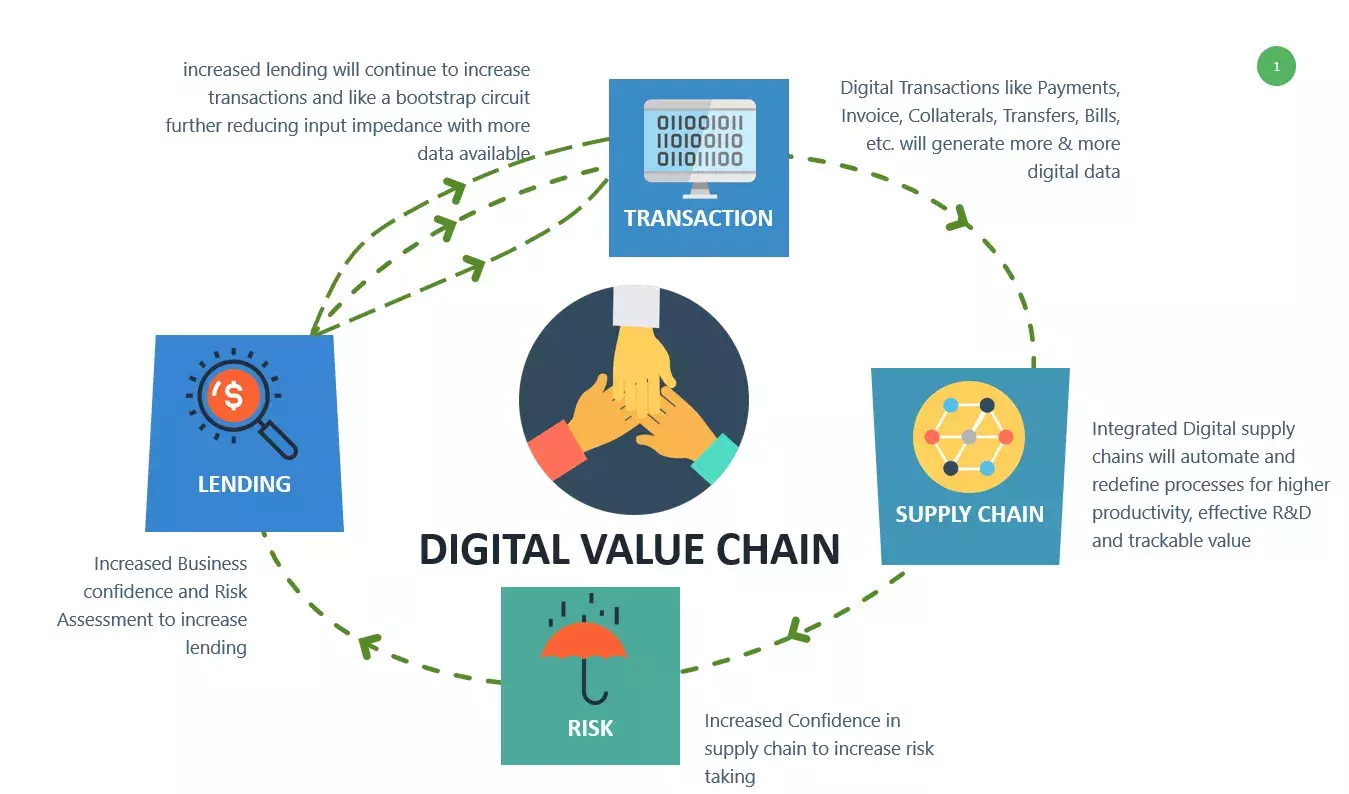
“In the banking sector, if a small business owner from the above manufacturing supply chain needs a loan and can make all required information available digitally – invoices, buyer and supplier details, inventory, collaterals, etc — the bank’s ability to assess risk is simplified, allowing the business to focus on running their shop instead of arranging funds. To be clear, this is not only about efficiency in lending. A true digital connect will also provide huge value in terms of financial advice, suggesting the right products and pricing. All of this enables businesses to invest more and expand.
“Businesses today must participate in defining, creating, and building this digital virtuous cycle with their partners. Financial institutions in particular, given their central place in a nation’s economy, need to lead this digital connect. Many are already on the digital transformation journey and engaging in various partnerships. However, these partnerships need to be expanded beyond just data and customer acquisition. To accelerate digital collaboration, FIs must think in terms of a platform that can realize the benefits of collaboration, optimize data sources, break down silos and learn from itself. They need the ability to test out various scenarios and operationalize advanced analytics and machine learning models to optimize interactions with their customers and partners while managing risks.”
#3. Mobile Operators and Coronavirus: Ideas To Help Slow The Spread
Mel Prescott noted several ways that mobile operators could use their network data to potentially help fight the virus.
“Call data records could also be used to monitor the movement of people. Human movement will directly accelerate the spread of disease, so being able to understand the broad patterns of population movement, coupled with the processing power of modern analytical software, enables data scientists to predict with accuracy where the disease is moving and help inform containment strategies. There are already instances of this, notably from Telefonica who have used CDRs to help, for example, measure the efficiency of government measures during the HN1 flu outbreak in Mexico back in 2009.
“It would be a difficult project to put together, and the privacy concerns are considerable; there are already stories emerging from South Korea where Health authorities are sending ‘safety guidance’ text messages which details the movements of individuals recently diagnosed with the virus. Whilst texts do not identify patients, they do give gender, age range and names of shops and restaurants they visited. So, any use of CDRs to track where infected people have been, and then trace the people they may have come into contact with, needs to be carefully managed with regard to privacy.”
“Perhaps another way CSPs can help is by increased use of digital omni-channel communications. For people travelling, as well as the usual roaming welcome message, there could be interactive messages via a range of channels that give the latest advice and precautionary guidelines specific to the location. For people returning home, the same could be true. Personalised and contextualised relevant messaging could help individuals and control the spread.
“Of course, as many companies are asking staff to work from home at the moment, businesses need to find a way to maintain operations as buildings and people are being quarantined. We are seeing an increase in use of our omni-channel communications platform in Asia as businesses increase their use of digital communications where staff are unable to get to contact centres. In China, where the virus was first reported in December, we have since seen a fivefold increase on the transaction volume of our Customer Communication Services from our customers there.”
#4. Five Things We Value More Because Of Covid-19
COVID-19 and the pandemic have changed people’s appreciation for things we used to take for granted. Zeynep Salman pointed out that in financial services, it has brought about new appreciation for technology as well.
1. Value of Platform Systems
“The primary lesson from financial companies’ response to COVID-19 market trends is that financial challenges cannot be tackled in isolation. They require collaborative working between teams and departments. This requires a “joined-up” centralized analysis and decisioning capability. Companies have realized that responding to new guidance from governments and bringing new financial products to market to support their customers affected by COVID-19 had to be addressed in a matter of hours, rather than days, and this could best be achieved via integrated systems running on a platform/suite.”
2. Value of Cloud-Based Systems
“When all employees were ordered to work from home, large operational departments — such as call centres or collections outbound and inbound teams — were required to move their operations to employees’ homes via security-protected equipment. Cloud-based systems enable companies to implement this on a larger scale within much shorter durations and at a significant cost advantage.”
3. Value of Customer-Level Management
“Companies have been reminded how important it is to know their customers’ historical and current financial situation and payment performance, in order to act with urgency to meet demand. This required customer-level database access, customer-level analysis and decision-making processes, especially when these customers come from all segments, e.g., from individuals and small business owners, to large corporations, which were normally managed by different departments within their organization.”
4. Value of Machine Learning Models
“Financial companies will observe significant differences between consumer behaviours in pre, during and post COVID-periods. Since machine learning models use algorithms that can learn and improve themselves in real time with each transaction, these models will dynamically adjust to revised consumer behaviour patterns. Financial companies will need to worry less about the degradation of model performance if they use machine learning models.”
5. Value of Digitalization
“Digitalization has already been a major focus for financial companies, with each of them at a different point of the digital maturity curve. However, with the unprecedented demand into their customer service departments, digital channels — with their scale, speed and efficiency advantages — were no longer an alternative channel, but the main communication channel for most financial companies. Digital autonomous services, such as chatbots, inbound IVRs, web forms, mobile applications, online payment channels and even social media, were heavily utilized for customer communication. Post COVID-19, there will be more digital customers and financial companies will need to invest more in digitalization.”
For more information on this topic, read our white paper on Agile Decisioning in an Unprecedented Downturn.
#5. FICO Loan Origination Solution Awarded Best-In-Class
Speaking of digital technology, Dave Lightfoot blogged about FICO’s Loan Origination Solution being recognized by Aite Group as best in class and the overall rankings leader for Retail Loan Origination Solutions (RLOS) in their comprehensive vendor analysis report “Aite Matrix: Transforming Consumer Lending Through Loan Origination Systems.”
Leslie Parrish, senior analyst at Aite Group, wrote that “Lenders that are looking to transform their lending to be more consumer-centric and efficient should look closely at what leading vendors offer in this space. Competitive RLOS solutions not only process loans in a compliant manner but also provide a frictionless application process, facilitate meaningful cross-sell opportunities, and provide lenders with insightful analytics to fine-tune their businesses.”
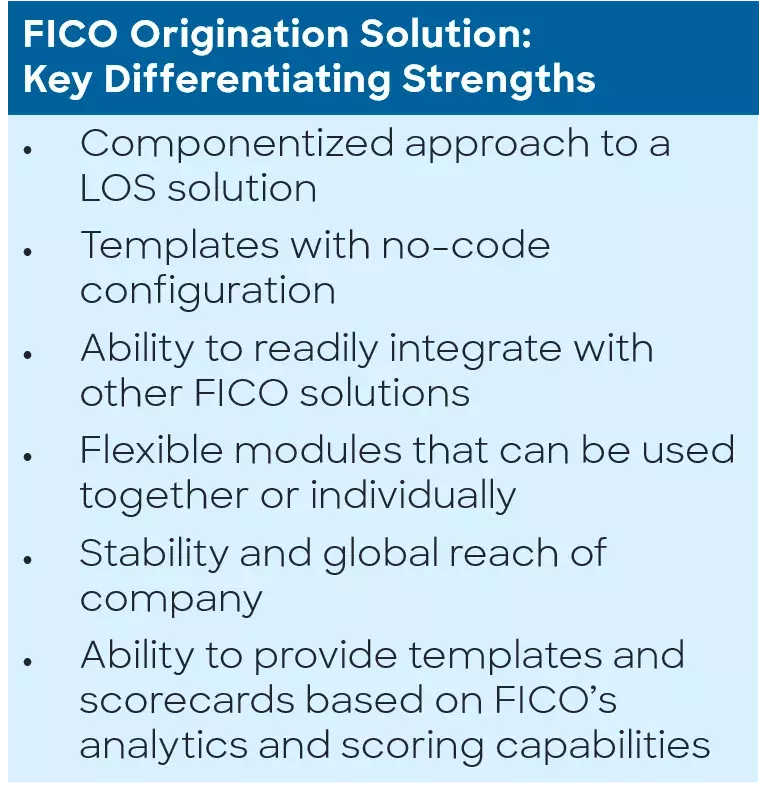
“In Aite’s vendor comparison, Parrish details how FICO’s robust and flexible modular-based approach to loan processing can fill the individualized needs of a wide range of financial institutions (FIs) globally,” Dave wrote. “As such, it is particularly worth a look for FIs above US$10 billion in assets and nonbank lenders that want to quickly transform one aspect of their loan origination process and perhaps deepen their relationship over time. Complementary solutions in the collections, marketing, communications, and fraud detection areas allow FIs to not only benefit from a modular origination solution but to also take advantage of adjacent solutions to reduce the number of vendors used across the entire loan lifecycle.”
FIs can quickly deploy FICO® Origination Manager modules through out-of-the-box configuration templates, which can be easily configured by the FI to suit its individual needs. For smaller FIs without the relevant in-house resources, FICO offers scorecards and modeling built on its decades of scoring and analytics experience. In both instances, FICO’s solution is tailored for FIs that do not have in-house resources to perform these tasks or do not want to take up precious IT resources to do so.
Parrish states in the report, “This combination of flexible and comprehensive solution offerings, robust capabilities, and global reach make FICO one of the leaders in this space.”
To learn more about FICO’s Loan Origination Solution, visit www.fico.com/en/solutions/origination-for-unsecured-lending

Popular Posts

Average U.S. FICO® Score at 716, Indicating Improvement in Consumer Credit Behaviors Despite Pandemic
The FICO Score is a broad-based, independent standard measure of credit risk
Read more
The GSE Data Is Public. Here's What It Shows About Credit Score Modernization.
Independent Milliman analysis of GSE historical data confirms what anyone can now verify directly: FICO® Score 10T is the most predictive score.
Read more
FICO® Score High Achievers: Is Age the Only Factor?
<p>FICO’s latest research on <a href="http://www.fico.com/en/blogs/risk-compliance/us-credit-quality-rising-the-beat-goes-on/" target="_blank">national FICO® Score distribution</a> shows that US credit quality continues to trend upwards, with an increasing number of consumers scoring in the highest scores ranges. Given that, we decided it was time to refresh our study on “<a href="http://www.fico.com/en/blogs/risk-compliance/infographic-what-does-a-high-credit-scorer-look-like/" target="_blank">FICO® Score high achievers</a>,” where we examine the credit behavioural profiles of consumers with higher credit scores.</p> <p>As expected, our latest study showed that older people generally have higher scores, as has been the case in our <a href="http://www.fico.com/en/blogs/risk-compliance/age-before-beauty-credit-worthiness-before-youth/" target="_blank">past research</a>. This is largely because they have trade lines that have been open longer, which leads to higher scores (assuming the trade lines are in good standing and all other things equal). The most credit savvy among you will remember that length of credit history accounts for roughly 15% of the overall <a href="http://www.myfico.com/CreditEducation/WhatsInYourScore.aspx" target="_blank">FICO® Score calculation</a>.</p> <p>But for younger consumers, it isn’t too helpful to say, “just wait until you are 50 years old, and that will fix things!” Thus, I decided to dive deeper with our analysis, including looking at the credit behavioural characteristics of younger consumers with high FICO® Scores.</p> <p>In this analysis, I looked at credit characteristics for the two highest score bands, 750-799 and 800-850, which have about 16% and 23% of the population, respectively. I further broke this down by looking at the characteristics of the youngest 15% in each group, which occurs at age 29 for the 750-799 group and 43 for the 800-850. We used FICO<strong>®</strong> Score 9 for our analysis, and examined typical variables of the categories that go into the make-up of the score.</p> <p><a href="http://www.fico.com/en/blogs/wp-content/uploads/2016/10/FICO-Score-High-Achiever-table.png"><img class="alignnone size-full wp-image-29367" src="http://www.fico.com/en/blogs/wp-content/uploads/2016/10/FICO-Score-High-Achiever-table.png" alt="fico-score-high-achiever-table" width="715" height="747" /></a></p> <p>Since there’s a lot to dissect in this chart, I’ll highlight a few findings that struck me: <ul> <li><strong>Credit history.</strong> Higher scores are undoubtedly associated with a longer time on file. What’s striking is the higher average time on file for the 800+ group, both overall and for revolving accounts (the most common trade line). Clearly, it helps to start credit use early in life – but that’s not the sole determining factor for high scoring. The younger cohorts in both the 800+ and 750-799 groups have time on file medians significantly less than their older counterparts.</li> <li><strong>New credit.</strong> High credit scorers do, in fact, pursue new credit. We see little variation in months since last trade line opening and last inquiry among all groups observed.</li> <li><strong>Pay on time.</strong> As you might expect, the further in the past the delinquency, the higher the score – and that’s <u>if</u> a delinquency ever happened. 95% of the 800+ people and 72% of the 750-799 group have never been delinquent, which is a striking contrast to the 57% for the total population. The percentages for the younger groups are even higher, especially so for the 750-799ers. Collection items are also scarce for these high scorers. While 23% of the national population have collection items greater than $99, the figures are only 0.5% for the 800+ group and 3% for the 750-799 group. It is clear that, in conjunction with starting a credit file early, paying on time is a key trait of the FICO® Score high achiever.</li> <li><strong>Balance and utilization.</strong> Finally, we look at how credit is being used, focusing on revolving product use. (Since most people only have one mortgage or one auto loan, variation in instalment product figures is minimal and driven by payment history, which is near perfect for high scorers, as we’ve seen.) FICO® Score high achievers tend to have more open revolving accounts. While the % active trades and utilization are generally lower, by no means do high scorers avoid the use of credit products. What drives the difference here is the amount of <u>available</u> revolving credit utilized. The 800+ group is roughly 1/4 of the national median, both in total and on their highest utilized card; they also have lower balances and more cards<em>. </em>The 750-799 group is more active and higher utilized, but still only at 2/3 of the national figures. The young 750-799 group compensate with lower revolving balances and, as a result, lower utilization, which is in line with what we see for the 800+ group.</li> <li><strong>Benchmarks.</strong> I’d like to point out that while this study provides good benchmarks of the typical credit traits of the FICO® Score high achiever, individual credit profiles will vary widely. And keep in mind that when we sort groups of consumers as a whole by different behaviours, some results may look superficially odd. For example, the 800+ band has a longer median average open account time (128 months) than average revolving months on file (140 months).</li> </ul> So, what do we conclude? A huge takeaway is that high scorers don’t have too much in the way of serious delinquencies and negative public record data.</p> <p>In most respects, the young 800+ people are like their peer group. They really only differ markedly in their shorter credit history and higher non-mortgage balance, both of which are a function of life stage. Our results show that you don’t have to be a credit product hermit; these high scorers have more credit cards. The takeaway is to start credit activity early and maintain well-managed and moderate usage.</p> <p>In many ways, the young 750-799 people are more interesting because their age profile is much younger. Their credit characteristics differ more from their peer group, particularly in terms of length of credit history. They compensate by having almost pristine credit records and lower balances.</p> <p>Ultimately, 39% of US consumers are FICO® Score high achievers, which they accomplish by following common-sense credit practices. It ain’t rocket science!</p>
Read moreTake the next step
Connect with FICO for answers to all your product and solution questions. Interested in becoming a business partner? Contact us to learn more. We look forward to hearing from you.