Arresting the Deposit Decline in Indian Banking
How FICO's advanced analytics can help banks win back deposits

Customers Are Prioritizing Higher Yields
Indian banks are facing an unprecedented challenge: a significant decline in traditional savings and current account deposits. The CASA (Current Account Savings Account) ratio has slipped from 45% in FY22 to 41% in FY24. This decline isn’t just a passing trend; it's driven by customers seeking higher returns through mutual funds and other investment options.
Fiscal 2024 marked a milestone for the domestic mutual funds industry, with assets under management (AUM) soaring by nearly ₹14 lakh crore (USD$168 billion), reaching a record ₹53.40 lakh crore (USD$641 billion) by March 2024, up from ₹39.42 lakh crore (USD$473 billion) in March 2023.
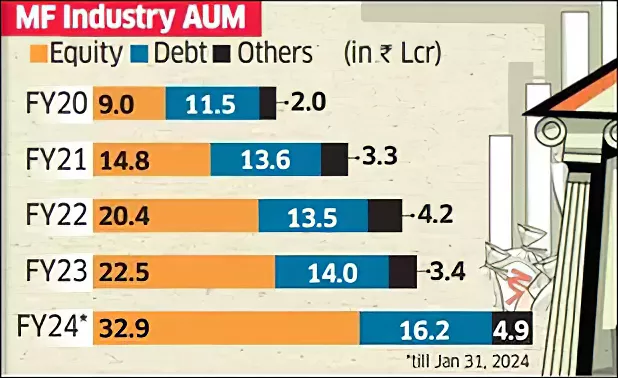
While this is good news for the mutual funds industry, it has created a challenging landscape for banks. Inflows from mutual fund Systematic Investment Plans (SIPs) exceeded ₹23,000 crore (USD$$2.8 billion) for the first time in July 2024, highlighting that customers are increasingly prioritizing higher yields over the security of traditional bank deposits. This shift has led to a slower growth rate for bank deposits compared to mutual fund AUM, posing a threat to the banks' deposit base, which is essential for maintaining liquidity and funding loans.
Finance Minister Nirmala Sitharaman recently emphasized the need for banks to refocus on deposit mobilization and lending. She called on banks to develop innovative and attractive schemes to draw in public funds and plans to meet with banking leaders to discuss strategies for boosting deposits and improving financial inclusion.
Banks are facing a "perfect storm" where the demand for loans continues to grow, but the deposit base is shrinking. The Reserve Bank of India (RBI) governor Shaktikanta Das has pointed out that interest rates were deregulated, making it inappropriate to interfere with market mechanisms. Banks are free to raise rates for shorter durations, but this alone may not be enough to reverse the trend.
Indian Deposit Pricing - Winning Back Customers
The challenge is clear: banks must find new ways to attract deposits or risk being unable to meet their lending obligations. Traditional methods, such as offering marginally higher interest rates, are no longer sufficient. What’s needed is a more sophisticated data-driven deposit pricing strategy that accurately measures and predicts customer behavior and preferences.
Banks require a structured approach to track objectives against market and regulatory realities, moving beyond static forecasts to strategy-dependent, prescriptive analytics. The solution lies in developing an analytical framework that, once configured, can be recalibrated as market conditions change, without requiring a complete rebuild. This flexibility allows banks to adapt their deposit strategies efficiently and effectively in response to shifting market dynamics.
A well-planned deposit pricing strategy can be undermined if it fails to account for the impact of new competitive products that divert flows from existing, more profitable offerings. However, these diversion flows can be modeled into pricing strategies. Simplifying this complex process by consolidating smaller cross-product flows with larger ones is crucial, especially in a competitive environment where interest rates may rise. Advanced analytics and price-sensitivity modeling are essential for optimizing portfolio performance, preserving liquidity, and increasing customer satisfaction through relationship-based deposit pricing that rewards profitable customers.
Transforming Indian Deposit Pricing Strategies with Advanced Analytics
FICO Platform equips banks with the tools to confront these challenges directly. By leveraging advanced analytics and optimization techniques, FICO enables banks to craft precise and effective deposit strategies, ensuring they attract and retain the right customers for the long term. Here’s how FICO Platform can revolutionize a bank’s approach to deposits:
Advanced Customer Behavior Analysis
FICO Platform analyzes vast amounts of customer data to uncover insights into behavior patterns, preferences, and trends. This allows banks to segment their customer base more effectively and target them with personalized offers that resonate, driving higher engagement and loyalty.
Predictive Modelling for Strategic Decision-Making
With FICO's predictive modeling capabilities, banks can anticipate how different customer segments will respond to various pricing and product offerings. This foresight enables banks to make strategic decisions that maximize deposit growth while balancing the need to protect margins.
Optimized Pricing Strategies
FICO Platform equips banks with the tools to develop and implement pricing strategies that drive competitive results. By adjusting interest rates and other incentives, banks can attract new deposits while maintaining profitability. This approach focuses on optimizing outcomes rather than just the individual factors themselves.
Regulatory Compliance and Risk Management
In an era of increased regulatory scrutiny, FICO Platform ensures that all deposit strategies comply fully with regulatory requirements. This reduces risk and allows banks to focus on growth with confidence.
Banks are at a crossroads. Declining deposits and rising competition from mutual funds demand a fresh approach. FICO Platform offers the cutting-edge analytics and optimization banks need to craft deposit strategies that not only attract and retain customers but also fuel long-term growth and profitability. The old ways aren't enough—it's time for a new game plan, and FICO is here to deliver it.
Learn How FICO Can Help You Improve Deposit Pricing
Read a case study about how Trust Bank, Singapore’s first ‘digital only’ bank, achieved rapid growth and scale in record time exceeding expectations while managing risk using FICO Platform Capabilities. Trust Bank acquired 100,000 customers in just 10 days and then grew to over 400,000 customers within four months of launch.
Explore our solutions for deposit price elasticity modeling and optimization
Watch the webinar on Five Strategies for Driving Always-on, Intelligent Deposit Pricing Decisions
Read the next post in this series: Modelling Deposit Price Elasticity: What Data Do You Need?

Popular Posts

Average U.S. FICO® Score at 716, Indicating Improvement in Consumer Credit Behaviors Despite Pandemic
The FICO Score is a broad-based, independent standard measure of credit risk
Read more
The GSE Data Is Public. Here's What It Shows About Credit Score Modernization.
Independent Milliman analysis of GSE historical data confirms what anyone can now verify directly: FICO® Score 10T is the most predictive score.
Read more
FICO® Score High Achievers: Is Age the Only Factor?
<p>FICO’s latest research on <a href="http://www.fico.com/en/blogs/risk-compliance/us-credit-quality-rising-the-beat-goes-on/" target="_blank">national FICO® Score distribution</a> shows that US credit quality continues to trend upwards, with an increasing number of consumers scoring in the highest scores ranges. Given that, we decided it was time to refresh our study on “<a href="http://www.fico.com/en/blogs/risk-compliance/infographic-what-does-a-high-credit-scorer-look-like/" target="_blank">FICO® Score high achievers</a>,” where we examine the credit behavioural profiles of consumers with higher credit scores.</p> <p>As expected, our latest study showed that older people generally have higher scores, as has been the case in our <a href="http://www.fico.com/en/blogs/risk-compliance/age-before-beauty-credit-worthiness-before-youth/" target="_blank">past research</a>. This is largely because they have trade lines that have been open longer, which leads to higher scores (assuming the trade lines are in good standing and all other things equal). The most credit savvy among you will remember that length of credit history accounts for roughly 15% of the overall <a href="http://www.myfico.com/CreditEducation/WhatsInYourScore.aspx" target="_blank">FICO® Score calculation</a>.</p> <p>But for younger consumers, it isn’t too helpful to say, “just wait until you are 50 years old, and that will fix things!” Thus, I decided to dive deeper with our analysis, including looking at the credit behavioural characteristics of younger consumers with high FICO® Scores.</p> <p>In this analysis, I looked at credit characteristics for the two highest score bands, 750-799 and 800-850, which have about 16% and 23% of the population, respectively. I further broke this down by looking at the characteristics of the youngest 15% in each group, which occurs at age 29 for the 750-799 group and 43 for the 800-850. We used FICO<strong>®</strong> Score 9 for our analysis, and examined typical variables of the categories that go into the make-up of the score.</p> <p><a href="http://www.fico.com/en/blogs/wp-content/uploads/2016/10/FICO-Score-High-Achiever-table.png"><img class="alignnone size-full wp-image-29367" src="http://www.fico.com/en/blogs/wp-content/uploads/2016/10/FICO-Score-High-Achiever-table.png" alt="fico-score-high-achiever-table" width="715" height="747" /></a></p> <p>Since there’s a lot to dissect in this chart, I’ll highlight a few findings that struck me: <ul> <li><strong>Credit history.</strong> Higher scores are undoubtedly associated with a longer time on file. What’s striking is the higher average time on file for the 800+ group, both overall and for revolving accounts (the most common trade line). Clearly, it helps to start credit use early in life – but that’s not the sole determining factor for high scoring. The younger cohorts in both the 800+ and 750-799 groups have time on file medians significantly less than their older counterparts.</li> <li><strong>New credit.</strong> High credit scorers do, in fact, pursue new credit. We see little variation in months since last trade line opening and last inquiry among all groups observed.</li> <li><strong>Pay on time.</strong> As you might expect, the further in the past the delinquency, the higher the score – and that’s <u>if</u> a delinquency ever happened. 95% of the 800+ people and 72% of the 750-799 group have never been delinquent, which is a striking contrast to the 57% for the total population. The percentages for the younger groups are even higher, especially so for the 750-799ers. Collection items are also scarce for these high scorers. While 23% of the national population have collection items greater than $99, the figures are only 0.5% for the 800+ group and 3% for the 750-799 group. It is clear that, in conjunction with starting a credit file early, paying on time is a key trait of the FICO® Score high achiever.</li> <li><strong>Balance and utilization.</strong> Finally, we look at how credit is being used, focusing on revolving product use. (Since most people only have one mortgage or one auto loan, variation in instalment product figures is minimal and driven by payment history, which is near perfect for high scorers, as we’ve seen.) FICO® Score high achievers tend to have more open revolving accounts. While the % active trades and utilization are generally lower, by no means do high scorers avoid the use of credit products. What drives the difference here is the amount of <u>available</u> revolving credit utilized. The 800+ group is roughly 1/4 of the national median, both in total and on their highest utilized card; they also have lower balances and more cards<em>. </em>The 750-799 group is more active and higher utilized, but still only at 2/3 of the national figures. The young 750-799 group compensate with lower revolving balances and, as a result, lower utilization, which is in line with what we see for the 800+ group.</li> <li><strong>Benchmarks.</strong> I’d like to point out that while this study provides good benchmarks of the typical credit traits of the FICO® Score high achiever, individual credit profiles will vary widely. And keep in mind that when we sort groups of consumers as a whole by different behaviours, some results may look superficially odd. For example, the 800+ band has a longer median average open account time (128 months) than average revolving months on file (140 months).</li> </ul> So, what do we conclude? A huge takeaway is that high scorers don’t have too much in the way of serious delinquencies and negative public record data.</p> <p>In most respects, the young 800+ people are like their peer group. They really only differ markedly in their shorter credit history and higher non-mortgage balance, both of which are a function of life stage. Our results show that you don’t have to be a credit product hermit; these high scorers have more credit cards. The takeaway is to start credit activity early and maintain well-managed and moderate usage.</p> <p>In many ways, the young 750-799 people are more interesting because their age profile is much younger. Their credit characteristics differ more from their peer group, particularly in terms of length of credit history. They compensate by having almost pristine credit records and lower balances.</p> <p>Ultimately, 39% of US consumers are FICO® Score high achievers, which they accomplish by following common-sense credit practices. It ain’t rocket science!</p>
Read moreTake the next step
Connect with FICO for answers to all your product and solution questions. Interested in becoming a business partner? Contact us to learn more. We look forward to hearing from you.