Transform Your Bank’s Customer Acquisition with Real-Time Decisioning
A FICO World session on how automation and real-time decisioning are transforming customer onboarding for financial institutions

Credit decisioning isn't an art—it’s a certainty. That was the key message from Jaron Murphy, one of FICO's banking subject matter experts, during his FICO World 2024 breakout session in San Diego. While the tools and processes organizations use for credit decisions may vary, one thing is clear: a solid framework can transform how you acquire customers in real time. By leveraging advanced analytics and machine learning, businesses can streamline their decision-making processes to build a more efficient and accurate credit evaluation system. These technologies are critical in navigating the expansive datasets companies are now able to collect, allowing for more precise customer insights. This shift towards data-driven decision-making ensures that businesses are not just meeting, but exceeding customer acquisition goals. And yes, 100% instant customer acquisition is not just possible—it’s happening today. Here’s how.
The Framework for Instant Credit Decisioning
A key challenge in customer acquisition is navigating the overwhelming volume of data. As companies work to harness exabytes of information, it’s easy to get lost in the sheer volume. But it's not about collecting all the data—it’s about getting the right data at the right time. This is where the concept of "data on demand" comes into play.
The framework that drives instant decisioning begins by bringing in both internal and external data. For existing customers, companies have a wealth of first-party data, but for new potential customers, third-party sources such as utility bills or alternative credit data can provide a more holistic view. With machine learning and AI, businesses can use this data to gain deeper insights and act accordingly, leading to faster, smarter decisions that support customer acquisition.
One client of FICO saw exposure rates increase by 15% without taking on additional risk by utilizing over 120 different data sources. “They revolutionized their understanding of who was applying for credit,” said Jaron, explaining how the client leveraged alternative data and built proprietary machine learning models in real time to enhance customer acquisition.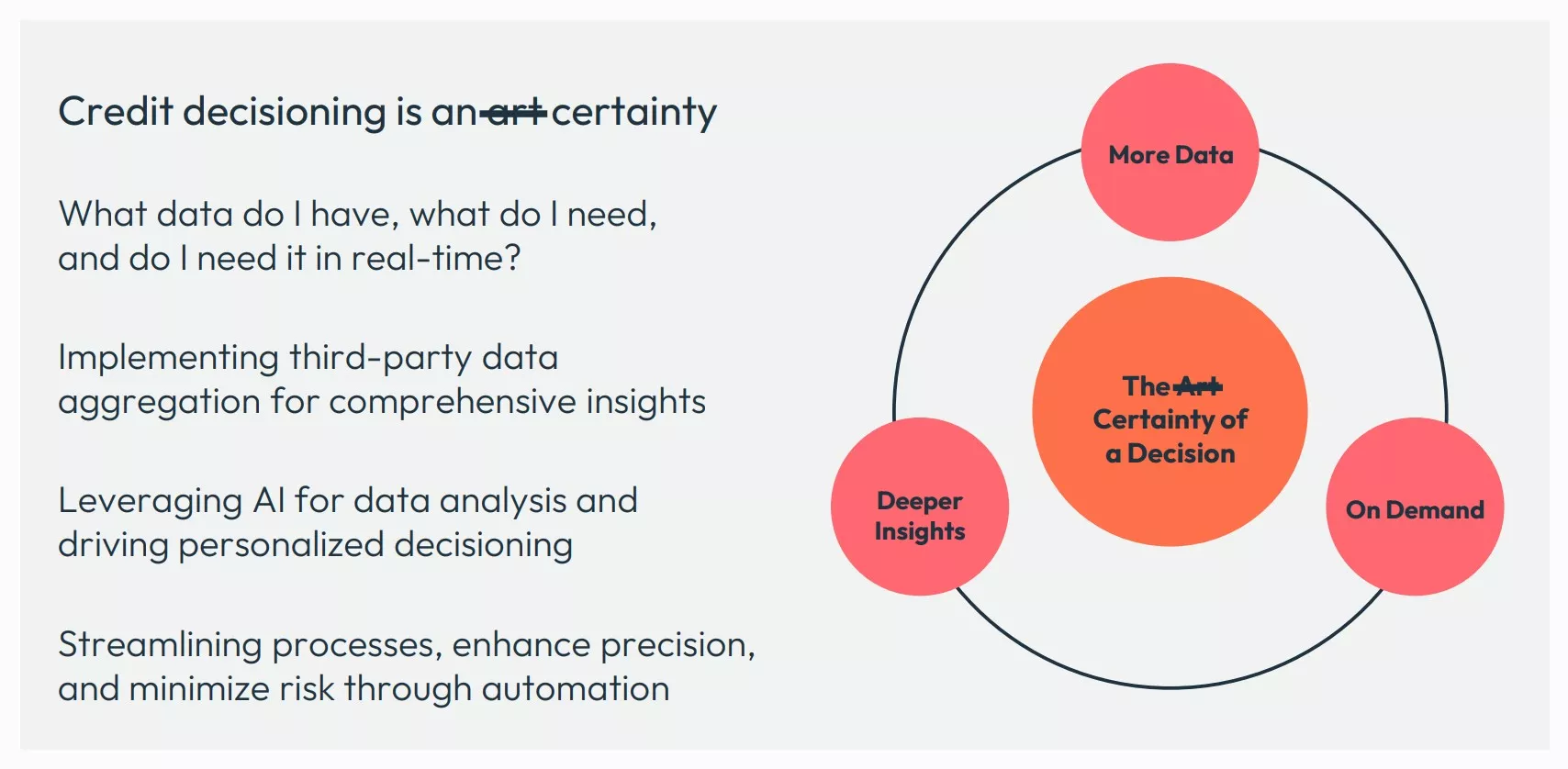

Personalizing Digital Onboarding at Scale
With 90% of applications now originating from digital channels, delivering personalization in a fully digital environment is not only essential but also the most effective way to manage customer acquisition costs. Understanding customers through data insights enables banks and businesses to personalize their digital experiences at scale, which is essential for improving customer acquisition success rates and boosting long-term customer retention.
One of the biggest challenges is balancing personalization with speed. “If an application takes more than five minutes, abandonment rates go up by 60%,” said Jaron. However, research shows that when customers understand why friction is introduced—such as to protect them from fraud—67% are willing to continue the process.
Applying the right friction at the right time, and communicating it clearly to customers, is key to maintaining a seamless onboarding experience without compromising security.
Fighting Fraud in Real-Time
Application fraud continues to rise, and it’s a growing concern for many organizations working on customer acquisition. “41% of fraud last year was application fraud,” Jaron noted, emphasizing that fraudsters are getting more sophisticated, often using synthetic identities or even deceased people’s information. One FICO client faced a situation where "over 80% of deceased applicants were getting approved," Jaron shared, which impacts the security of customer acquisition.
The solution? Real-time fraud detection. FICO’s fraud detection tools and application fraud scores allow businesses to verify data instantly and prevent fraudulent applications from being approved. “It’s about reacting faster—staying a step ahead of fraudsters,” Jaron said.
Optimizing Pricing with AI and Data
Customer acquisition doesn’t end at onboarding. Optimizing pricing strategies based on data and predictive analytics can significantly enhance customer engagement and boost customer acquisition efforts. Many businesses fall into the trap of offering the lowest price to win customers. “It’s not a race to the bottom,” Jaron emphasized. “It’s a race to the sweet spot.”
Using FICO’s dynamic pricing optimization, companies can offer the right price instead of the lowest price, tailored to each customer’s profile. Jaron explained that one client saw tremendous success by embracing this personalized pricing approach, improving conversion rates and deepening customer trust.
Automating for Real-Time Decisioning
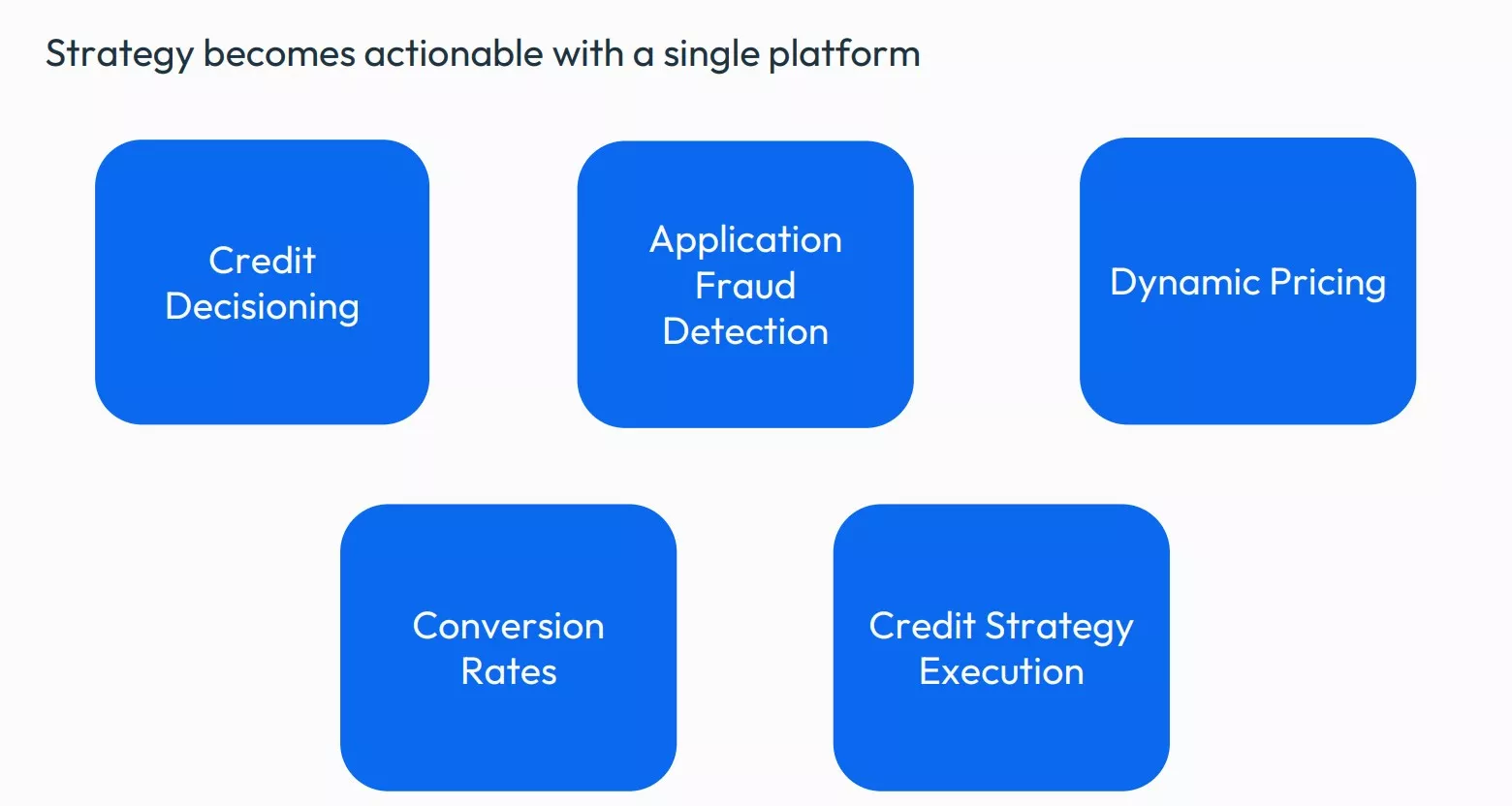
Automation is the key to instant customer acquisition. By automating the credit decisioning process—from data collection to fraud detection and pricing—businesses can streamline operations and enhance decision-making.
Through FICO Platform, companies can enable real-time decisioning with a composable architecture. This allows businesses to make changes on the fly, adapt strategies in real time, and ultimately deliver personalized experiences faster. “It’s about empowering your business users to own the technology,” said Jaron.
How FICO Can Help with Customer Acquisition and Onboarding
FICO Platform provides the tools to streamline and optimize customer acquisition through automation, real-time decision-making, and personalized onboarding. Here’s how FICO can help:
- Watch how Trust Bank scaled rapidly: Trust Bank, Singapore’s first digital-only bank, acquired 100,000 customers in just 10 days and exceeded 400,000 within four months, all while managing risk with FICO Platform capabilities, significantly improving their customer acquisition strategy.
- Read about Digital Account Opening: Learn more about consumer preference and tools to encouraging customers to embrace digital account openings
- Discover digital banking onboarding strategies: Find out how digital banking innovations can streamline onboarding, as GXS Bank successfully onboards customers in less than 3 minutes with FICO, enhancing their customer acquisition results.
By combining AI, machine learning, and automation, FICO enables businesses to achieve 100% instant customer acquisition, delivering secure, personalized experiences at scale. Leveraging these advanced technologies, companies can accurately analyze large volumes of data in real-time, facilitating more rapid and precise credit decisioning and enhancing lead generation efforts. This integration allows for the seamless onboarding of new customers by ensuring customized interactions that cater to individual preferences and needs, maximizing customer lifetime value. Furthermore, adopting these intelligent systems not only boosts operational efficiency but also enhances security measures against fraud, significantly reducing the risk associated with customer acquisition. Ultimately, FICO's technology suite empowers businesses to adapt dynamically to market changes, ensuring they stay ahead of the competition while fostering customer trust and loyalty.

Popular Posts

Average U.S. FICO® Score at 716, Indicating Improvement in Consumer Credit Behaviors Despite Pandemic
The FICO Score is a broad-based, independent standard measure of credit risk
Read more
The GSE Data Is Public. Here's What It Shows About Credit Score Modernization.
Independent Milliman analysis of GSE historical data confirms what anyone can now verify directly: FICO® Score 10T is the most predictive score.
Read more
FICO® Score High Achievers: Is Age the Only Factor?
<p>FICO’s latest research on <a href="http://www.fico.com/en/blogs/risk-compliance/us-credit-quality-rising-the-beat-goes-on/" target="_blank">national FICO® Score distribution</a> shows that US credit quality continues to trend upwards, with an increasing number of consumers scoring in the highest scores ranges. Given that, we decided it was time to refresh our study on “<a href="http://www.fico.com/en/blogs/risk-compliance/infographic-what-does-a-high-credit-scorer-look-like/" target="_blank">FICO® Score high achievers</a>,” where we examine the credit behavioural profiles of consumers with higher credit scores.</p> <p>As expected, our latest study showed that older people generally have higher scores, as has been the case in our <a href="http://www.fico.com/en/blogs/risk-compliance/age-before-beauty-credit-worthiness-before-youth/" target="_blank">past research</a>. This is largely because they have trade lines that have been open longer, which leads to higher scores (assuming the trade lines are in good standing and all other things equal). The most credit savvy among you will remember that length of credit history accounts for roughly 15% of the overall <a href="http://www.myfico.com/CreditEducation/WhatsInYourScore.aspx" target="_blank">FICO® Score calculation</a>.</p> <p>But for younger consumers, it isn’t too helpful to say, “just wait until you are 50 years old, and that will fix things!” Thus, I decided to dive deeper with our analysis, including looking at the credit behavioural characteristics of younger consumers with high FICO® Scores.</p> <p>In this analysis, I looked at credit characteristics for the two highest score bands, 750-799 and 800-850, which have about 16% and 23% of the population, respectively. I further broke this down by looking at the characteristics of the youngest 15% in each group, which occurs at age 29 for the 750-799 group and 43 for the 800-850. We used FICO<strong>®</strong> Score 9 for our analysis, and examined typical variables of the categories that go into the make-up of the score.</p> <p><a href="http://www.fico.com/en/blogs/wp-content/uploads/2016/10/FICO-Score-High-Achiever-table.png"><img class="alignnone size-full wp-image-29367" src="http://www.fico.com/en/blogs/wp-content/uploads/2016/10/FICO-Score-High-Achiever-table.png" alt="fico-score-high-achiever-table" width="715" height="747" /></a></p> <p>Since there’s a lot to dissect in this chart, I’ll highlight a few findings that struck me: <ul> <li><strong>Credit history.</strong> Higher scores are undoubtedly associated with a longer time on file. What’s striking is the higher average time on file for the 800+ group, both overall and for revolving accounts (the most common trade line). Clearly, it helps to start credit use early in life – but that’s not the sole determining factor for high scoring. The younger cohorts in both the 800+ and 750-799 groups have time on file medians significantly less than their older counterparts.</li> <li><strong>New credit.</strong> High credit scorers do, in fact, pursue new credit. We see little variation in months since last trade line opening and last inquiry among all groups observed.</li> <li><strong>Pay on time.</strong> As you might expect, the further in the past the delinquency, the higher the score – and that’s <u>if</u> a delinquency ever happened. 95% of the 800+ people and 72% of the 750-799 group have never been delinquent, which is a striking contrast to the 57% for the total population. The percentages for the younger groups are even higher, especially so for the 750-799ers. Collection items are also scarce for these high scorers. While 23% of the national population have collection items greater than $99, the figures are only 0.5% for the 800+ group and 3% for the 750-799 group. It is clear that, in conjunction with starting a credit file early, paying on time is a key trait of the FICO® Score high achiever.</li> <li><strong>Balance and utilization.</strong> Finally, we look at how credit is being used, focusing on revolving product use. (Since most people only have one mortgage or one auto loan, variation in instalment product figures is minimal and driven by payment history, which is near perfect for high scorers, as we’ve seen.) FICO® Score high achievers tend to have more open revolving accounts. While the % active trades and utilization are generally lower, by no means do high scorers avoid the use of credit products. What drives the difference here is the amount of <u>available</u> revolving credit utilized. The 800+ group is roughly 1/4 of the national median, both in total and on their highest utilized card; they also have lower balances and more cards<em>. </em>The 750-799 group is more active and higher utilized, but still only at 2/3 of the national figures. The young 750-799 group compensate with lower revolving balances and, as a result, lower utilization, which is in line with what we see for the 800+ group.</li> <li><strong>Benchmarks.</strong> I’d like to point out that while this study provides good benchmarks of the typical credit traits of the FICO® Score high achiever, individual credit profiles will vary widely. And keep in mind that when we sort groups of consumers as a whole by different behaviours, some results may look superficially odd. For example, the 800+ band has a longer median average open account time (128 months) than average revolving months on file (140 months).</li> </ul> So, what do we conclude? A huge takeaway is that high scorers don’t have too much in the way of serious delinquencies and negative public record data.</p> <p>In most respects, the young 800+ people are like their peer group. They really only differ markedly in their shorter credit history and higher non-mortgage balance, both of which are a function of life stage. Our results show that you don’t have to be a credit product hermit; these high scorers have more credit cards. The takeaway is to start credit activity early and maintain well-managed and moderate usage.</p> <p>In many ways, the young 750-799 people are more interesting because their age profile is much younger. Their credit characteristics differ more from their peer group, particularly in terms of length of credit history. They compensate by having almost pristine credit records and lower balances.</p> <p>Ultimately, 39% of US consumers are FICO® Score high achievers, which they accomplish by following common-sense credit practices. It ain’t rocket science!</p>
Read moreTake the next step
Connect with FICO for answers to all your product and solution questions. Interested in becoming a business partner? Contact us to learn more. We look forward to hearing from you.