From Detection to Prevention – Tackling Scams from Every Angle
As real-time payments continue to grow globally, authorized push payment fraud scams follow. making intervention imperative

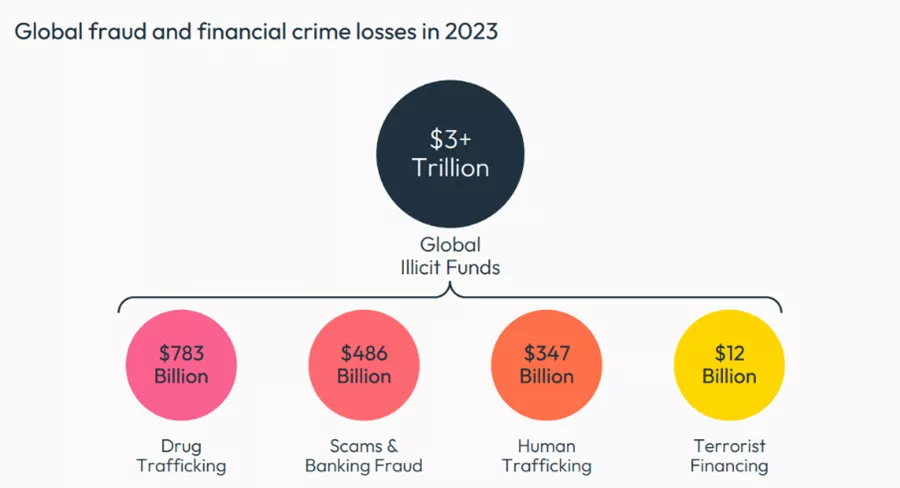
A recent NASDAQ financial crime study revealed that of the $3 trillion in illicit funds processed last year, approximately $486 billion could be attributed to scams and fraud. They continue to evolve and slip through the systems being developed to stop them.
At FICO World 2024, FICO expert Naomi Palmer and I explored the underlying factors enabling the success of scams and the strategies needed to stay ahead of them.
The Psychology and Economic Factors Behind Scams
Scammers leverage human psychology to exploit victims during their most vulnerable moments, explained Naomi. Most individuals are familiar with the typical warning messages from banks, advising against sending money to unknown contacts. These messages can work when our brains are in a ‘cold state’ where we are in control and not as vulnerable. However, when people find themselves in a ‘hot state’ — emotionally charged moments, such as the thrill of a slot machine win or the urgency of Black Friday sales — they become more susceptible to scams. Fraudsters are expert at social engineering, creating a sense of urgency, making it difficult for potential victims to resist and easier for fraudsters to manipulate them.
I highlighted that several economic factors have created the perfect storm, leading to increased financial crime and more individuals falling victim to scams.
The ongoing fallout from the COVID-19 pandemic, a persistent cost-of-living crisis, and global conflicts have heightened financial strain for many individuals. More people feel compelled to either participate in fraud as a quick means of income or have become targets themselves. There are three main components at work here:
- Motivation: The desire to get rich quickly or the need to support a family can push individuals toward fraudulent activities.
- Opportunity: Technology has created unprecedented opportunities, enabling criminals to operate from anywhere with minimal risk.
- Rationalization: Individuals often convince themselves that their actions are justified, viewing fraud as a necessity rather than a crime.
Technology – a Double-Edged Sword
While industries rave about the benefits of significant advancements in technology, these same advancements are making it easier for criminals to execute their schemes from virtually anywhere and with the appearance of legitimacy, according to Naomi. For instance, fraudsters now utilize sophisticated tools like deep fakes and voice cloning to enhance their deception.
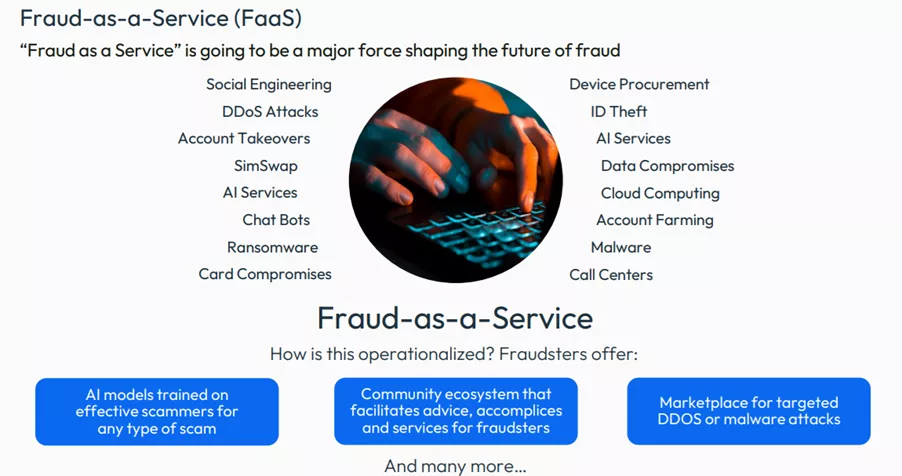
Organized crime rings are now employing models akin to ‘fraud as a service’, where various services related to fraud—such as malware and identity theft—are offered on the black market. This has transformed the nature of fraud, allowing even amateur criminals to access tools and strategies that were previously available only to seasoned professionals.
Regulatory Responses and Solutions
In light of the growing threat of fraud, regulators have stepped up their efforts to address the issue. This is driving greater collaboration between financial institutions, telecommunications providers, and law enforcement agencies to share data and improve fraud prevention efforts. Three key themes have arisen from this increased focus:
- Consumer empowerment: Helping victims recognize potential fraud through alerts and education. For example, confirmation of payee systems to help individuals ensure they’re sending money to the correct recipient.
- Data sharing: Enhancing communication and information sharing between financial institutions and relevant organizations to create a more comprehensive approach to fraud detection.
- Liability shifts: Some countries are implementing legislation to share liability for fraud losses, ensuring that multiple parties take responsibility for protecting consumers.
Building Fraud Prevention into the Customer Life Cycle
There are many stages to a scam, beginning at originations, when for example a mule account is created, developing right through to the point a payment is made. Fraud prevention, therefore, needs to be a critical consideration at every stage of the customer lifecycle.
As well as at the account opening phase, verifying customer identity is essential as an ongoing process with methods like passive authentication, which can prove critical for detecting red flags in behaviors that deviate from the norm.
Once a customer is onboarded, transactional fraud monitoring plays a key role in protecting both the customer and the bank. However, with scams constantly evolving, these monitoring tools must continue to evolve as well.
It shouldn’t stop there. Other tools are needed to connect the dots from the point of origination all the way through the payment itself. By using tools like entity profiling and link analysis, patterns across different fraud cases can be identified, helping banks detect organized crime rings.
Communication with customers is also vital. While it does exist throughout the lifecycle, where fraud is concerned it shapes their perception of the bank’s security and builds trust.
It’s worth noting that fraud prevention efforts generate valuable data about customer behaviors, which can be used to help grow relationships and reduce onboarding friction for future products while preventing fraud. Connecting the dots between customer interactions and transactions allows for a comprehensive approach to fraud prevention, protecting both customers and banks.
Three Key ‘Must Haves’ in the Fight Against Scams Today
Scams pose significant challenges for all organizations, but there are three essential components for effective fraud detection and fraud prevention that can be implemented today.
- The latest scam detection models, such as FICO's latest retail banking model, which distinguishes between general fraud and scam-focused threats, allowing for tailored prevention strategies. Otherwise, organizations will find themselves trying to fight new and emerging scams using tools designed to address general fraud scenarios.
- Data to confirm if scam activity is likely, while models can detect likely fraud taking action to intervene with the customer or even stop the payment requires a level of confidence that fraud is in progress. Bringing data sources together that provide a more rounded view of what is happening is vital to turning detection to prevention. FICO has been working with our partner Jersey Telecom on an award-winning scams signal that uses telco data to reinforce decision making for scams prevention.
- Identity resolution and link analysis involves consolidating data from various sources to create a comprehensive view of individuals and their activities. By understanding connections between entities, organizations can identify potential fraud patterns and react swiftly.
- Omnichannel communication is a move beyond traditional messaging methods. It is dynamic, automated and tailored communication strategies to focus on the specific scam type and to break the manipulative spell cast by fraudsters.
We concluded that the goal is not to overhaul existing systems, but to complement them, so that organizations can keep evolving their strategies as quickly as their counterparts in the criminal world.
How FICO Helps Detect and Prevent Scams
- Learn how FICO helps financial institutions prevent scams
- Explore how Dock has used real-time customer communications to stop more fraud.
- Read about FICO’s award winning, machine learning-powered retail banking model with scam detection score
- Download the FICO 2023 Scams Impact Survey

Popular Posts

Average U.S. FICO® Score at 716, Indicating Improvement in Consumer Credit Behaviors Despite Pandemic
The FICO Score is a broad-based, independent standard measure of credit risk
Read more
The GSE Data Is Public. Here's What It Shows About Credit Score Modernization.
Independent Milliman analysis of GSE historical data confirms what anyone can now verify directly: FICO® Score 10T is the most predictive score.
Read more
FICO® Score High Achievers: Is Age the Only Factor?
<p>FICO’s latest research on <a href="http://www.fico.com/en/blogs/risk-compliance/us-credit-quality-rising-the-beat-goes-on/" target="_blank">national FICO® Score distribution</a> shows that US credit quality continues to trend upwards, with an increasing number of consumers scoring in the highest scores ranges. Given that, we decided it was time to refresh our study on “<a href="http://www.fico.com/en/blogs/risk-compliance/infographic-what-does-a-high-credit-scorer-look-like/" target="_blank">FICO® Score high achievers</a>,” where we examine the credit behavioural profiles of consumers with higher credit scores.</p> <p>As expected, our latest study showed that older people generally have higher scores, as has been the case in our <a href="http://www.fico.com/en/blogs/risk-compliance/age-before-beauty-credit-worthiness-before-youth/" target="_blank">past research</a>. This is largely because they have trade lines that have been open longer, which leads to higher scores (assuming the trade lines are in good standing and all other things equal). The most credit savvy among you will remember that length of credit history accounts for roughly 15% of the overall <a href="http://www.myfico.com/CreditEducation/WhatsInYourScore.aspx" target="_blank">FICO® Score calculation</a>.</p> <p>But for younger consumers, it isn’t too helpful to say, “just wait until you are 50 years old, and that will fix things!” Thus, I decided to dive deeper with our analysis, including looking at the credit behavioural characteristics of younger consumers with high FICO® Scores.</p> <p>In this analysis, I looked at credit characteristics for the two highest score bands, 750-799 and 800-850, which have about 16% and 23% of the population, respectively. I further broke this down by looking at the characteristics of the youngest 15% in each group, which occurs at age 29 for the 750-799 group and 43 for the 800-850. We used FICO<strong>®</strong> Score 9 for our analysis, and examined typical variables of the categories that go into the make-up of the score.</p> <p><a href="http://www.fico.com/en/blogs/wp-content/uploads/2016/10/FICO-Score-High-Achiever-table.png"><img class="alignnone size-full wp-image-29367" src="http://www.fico.com/en/blogs/wp-content/uploads/2016/10/FICO-Score-High-Achiever-table.png" alt="fico-score-high-achiever-table" width="715" height="747" /></a></p> <p>Since there’s a lot to dissect in this chart, I’ll highlight a few findings that struck me: <ul> <li><strong>Credit history.</strong> Higher scores are undoubtedly associated with a longer time on file. What’s striking is the higher average time on file for the 800+ group, both overall and for revolving accounts (the most common trade line). Clearly, it helps to start credit use early in life – but that’s not the sole determining factor for high scoring. The younger cohorts in both the 800+ and 750-799 groups have time on file medians significantly less than their older counterparts.</li> <li><strong>New credit.</strong> High credit scorers do, in fact, pursue new credit. We see little variation in months since last trade line opening and last inquiry among all groups observed.</li> <li><strong>Pay on time.</strong> As you might expect, the further in the past the delinquency, the higher the score – and that’s <u>if</u> a delinquency ever happened. 95% of the 800+ people and 72% of the 750-799 group have never been delinquent, which is a striking contrast to the 57% for the total population. The percentages for the younger groups are even higher, especially so for the 750-799ers. Collection items are also scarce for these high scorers. While 23% of the national population have collection items greater than $99, the figures are only 0.5% for the 800+ group and 3% for the 750-799 group. It is clear that, in conjunction with starting a credit file early, paying on time is a key trait of the FICO® Score high achiever.</li> <li><strong>Balance and utilization.</strong> Finally, we look at how credit is being used, focusing on revolving product use. (Since most people only have one mortgage or one auto loan, variation in instalment product figures is minimal and driven by payment history, which is near perfect for high scorers, as we’ve seen.) FICO® Score high achievers tend to have more open revolving accounts. While the % active trades and utilization are generally lower, by no means do high scorers avoid the use of credit products. What drives the difference here is the amount of <u>available</u> revolving credit utilized. The 800+ group is roughly 1/4 of the national median, both in total and on their highest utilized card; they also have lower balances and more cards<em>. </em>The 750-799 group is more active and higher utilized, but still only at 2/3 of the national figures. The young 750-799 group compensate with lower revolving balances and, as a result, lower utilization, which is in line with what we see for the 800+ group.</li> <li><strong>Benchmarks.</strong> I’d like to point out that while this study provides good benchmarks of the typical credit traits of the FICO® Score high achiever, individual credit profiles will vary widely. And keep in mind that when we sort groups of consumers as a whole by different behaviours, some results may look superficially odd. For example, the 800+ band has a longer median average open account time (128 months) than average revolving months on file (140 months).</li> </ul> So, what do we conclude? A huge takeaway is that high scorers don’t have too much in the way of serious delinquencies and negative public record data.</p> <p>In most respects, the young 800+ people are like their peer group. They really only differ markedly in their shorter credit history and higher non-mortgage balance, both of which are a function of life stage. Our results show that you don’t have to be a credit product hermit; these high scorers have more credit cards. The takeaway is to start credit activity early and maintain well-managed and moderate usage.</p> <p>In many ways, the young 750-799 people are more interesting because their age profile is much younger. Their credit characteristics differ more from their peer group, particularly in terms of length of credit history. They compensate by having almost pristine credit records and lower balances.</p> <p>Ultimately, 39% of US consumers are FICO® Score high achievers, which they accomplish by following common-sense credit practices. It ain’t rocket science!</p>
Read moreTake the next step
Connect with FICO for answers to all your product and solution questions. Interested in becoming a business partner? Contact us to learn more. We look forward to hearing from you.