What are MVD’s and Why Do They Matter?
Most Valuable Disciplines (MVD) are driving excellence in Debt Collection and Recovery, particularly over periods of ambiguity.

COVID-19 has steered a unique shift in the way people consume, interact, engage, and conduct business. As of September 2021, unprecedented uncertainties continue, making it challenging for anyone to predict with a high level of confidence when, or how quickly, the economy will fully recover. Consumers, however, have been prudent with spending and with their use of stimulus checks. Surveys have shown that customers used at least a portion of their relief payments to pay down debts or get caught up on their loans, notably surveys have also found that households plan to use more than one-third of their stimulus payment to pay down debt (HERE).
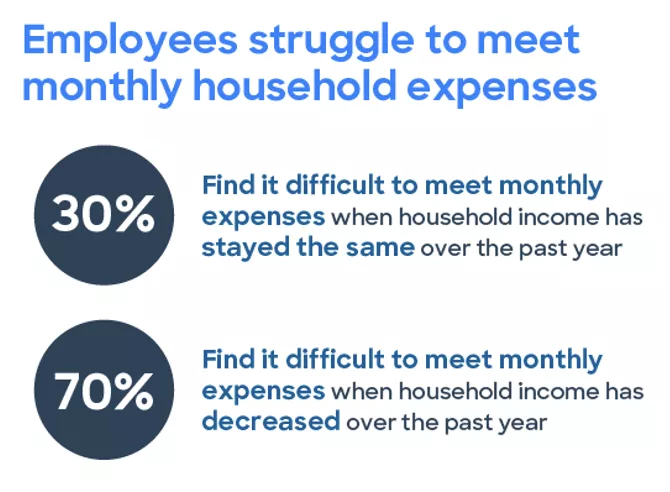
While we look ahead with positive anticipation of an economic recovery, we still must be mindful of the potential lagged and lingering impact of the last 18 months on the economy and consumer behavior. As per PWC, employees whose financial stress have increased due to the pandemic are four times as likely to
- have experienced a decrease in overall household income
- find it difficult to meet household expenses on time each month
It would be prudent to validate if the risk distribution of customers has shifted towards the high risk especially following the survey findings of the 2021 PwC Employee Financial Wellness Survey.
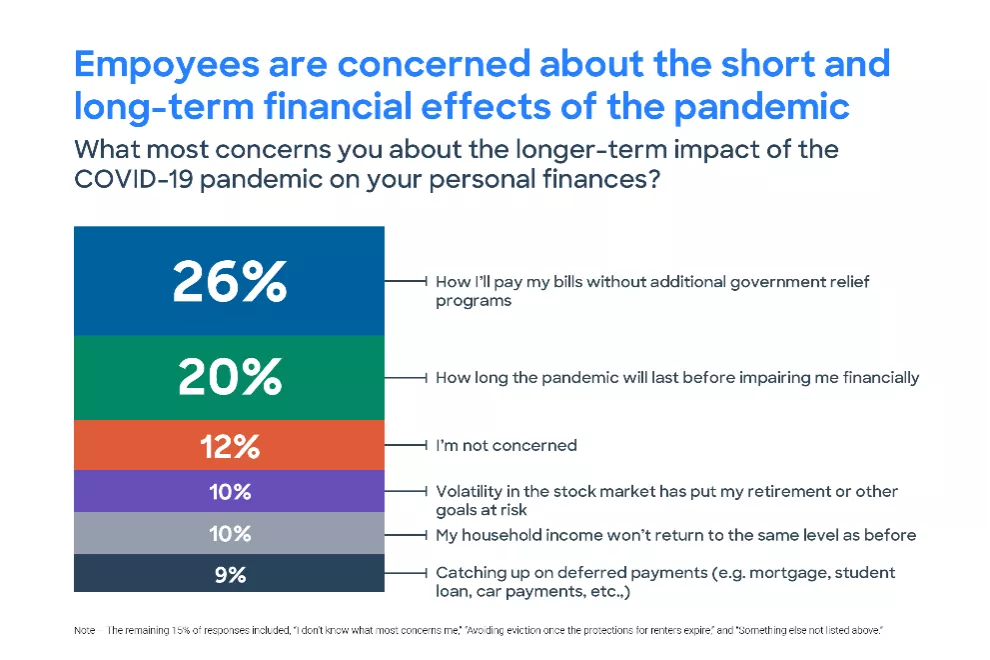
Collections and Recovery is in a unique situation at this pivotal period. The post pandemic customer landscape is potentially shifting across risk distributions within the delinquent portfolio. Further complexities owing to changing customer engagement preferences, make it critical that collections ascertain which customers will self-cure so that collections treatments can focus on the customers who require collections intervention to resolve their payment issues.
Organizational risk appetite may be shifting as well, especially where economic recovery is slower or less certain. In such an environment of ambiguity, managing a successful Collections and Recovery organization balancing twin goals of improving and sustaining collections portfolio effectiveness and maintaining or reducing operating costs within budget, necessitates the strategic infusion of certain most valuable disciplines or MVD’s as I refer to them.
The 7 Essential Debt Collections and Recovery Most Valuable Disciplines (MVD)

- A Customer Level View: Define and design a complete and single view of the customer across the multiple product lines, which facilitates the ability to have a strategy in place that ensures collections efforts are directed at a customer level. Collection strategies and apportioning of related costs are therefore concentrated on the appropriate customer level cases. The overall customer experience with the collections department is also better aligned to facilitating growth and profitability through the appropriate retention of future good customers through effective rehabilitation. Feedback from Chief Risk Officers to FICO indicates that a customer view enables 14% lower loss rates than having a fragmented view.
- Data & Analytics: Define a broad range of input sources available for collections specific decisioning including collections activity data, account performance from initial entry to a past due state, collections transactional data, and relevant alternative data sources. For a full-service bank, data sources can also include deposit account data – especially considering any changes in direct deposit payroll activity.
- Scores, Segmentation & Models: Define and leverage collection models to increase the ability to collect debts over the COVID-19 / post COVID-19 period while focusing on minimizing the cost of collections by efficient and effective allocation and management of resources and deploying the appropriate treatments on the customers based on their risk levels to protect an adverse impact to impairment with the most cost-effective treatment.
- Optimization: Define and design a competitive collections strategy leveraging optimization. Experiment with trade-offs between decision factors and business constraints, simulate various scenarios and compare their impact on collections key performance indicators and contributions to the bottom-line. This improves the ability to adopt and deploy the optimal strategy right at outset.
- Digital Communications Solutions: Define and design analytically driven contact strategies aligned to the risk of the account, IFRS9/CECL implications and compliant with regulatory requirements, and customer contact preferences to achieve improved collections effectiveness via a coordinated multichannel orchestration approach utilizing preferred and efficient contact practices. Efficient omni-channel communication utilizes data and analytics, determines precisely how to make contact, and provides seamless continuity across the interaction with connected decisioning.
- Collections Strategy Framework: Define and design 3 versions of the Collections Strategy: (a) Collections Strategy for when the tailwinds have propelled growth and the results continue to hold post pandemic; (b) A Collections Strategy for when the headwinds have stifled growth and potentially pummeled delinquency rates; (c) A Collections Strategy for successfully maneuvering the headwinds and tailwinds and positioning the financial institution for continuous improvement through leveraging champion challenger strategies
- Operating Model: Define and design the Target Operating Model that provides a framework for effective strategy design and seamless execution. Ensure all stakeholders are aligned to business objectives. Assign the appropriate roles and responsibilities to all Collections staff. Create metrics and MIS to ensure that all resources are correctly aligned and effectively deployed, as well as delivering against business goals and expectations. The operating model must also ensure and facilitate a robust, resilient, and scalable Collections and Recoveries department that leverages all the Most Valuable Disciplines (MVD’s) efficiently and effectively.
Has this been your experience?

- Tailwinds
- Consumers are performing well one year into the pandemic with delinquency rates low across most consumer product lines
- Surge in account originations activity continued its uptrend and return to ‘normal’ levels
- Banks release reserves in anticipation of lower Covid losses
- Headwinds
- Possibility that delinquencies are low since stimulus payments were saved or applied to debt and stimulus payments will shortly cease
- Expiration of protections that prevented aging and reporting delinquency in favor of extended forbearance preventing issuers from differentiating those taking advantage of these moratoria and those truly unable to pay
- Post stimulus payments altering consumer risk distribution moving towards high risk
- IFRS9 requirements and potential CFPB new rule implications compounded by changing customer contact preferences
At FICO, we support our strategic clients through a combination of FICO® Advisory and Analytics Services to successfully leverage the current environment’s tailwinds that are propelling the momentum towards revenue and growth and maneuver the headwinds that could blow against the potential positive trajectory.
FICO Advisors support our clients in defining and designing a collections and recoveries operating ecosystem that enables agile, efficient, and seamless decisioning across analytics, strategy, operations, and communication. This is achieved through supporting and facilitating the cohesive implementation of these essential Most Valuable Disciplines (MVD) critical to success, notwithstanding a lagged delinquency impact that could make itself felt in 2021-22, a sharp increase in delinquencies or an improving and stable portfolio post the pandemic.
To find out more, about how FICO can help your business, click here.

Popular Posts

Average U.S. FICO® Score at 716, Indicating Improvement in Consumer Credit Behaviors Despite Pandemic
The FICO Score is a broad-based, independent standard measure of credit risk
Read more
The GSE Data Is Public. Here's What It Shows About Credit Score Modernization.
Independent Milliman analysis of GSE historical data confirms what anyone can now verify directly: FICO® Score 10T is the most predictive score.
Read more
FICO® Score High Achievers: Is Age the Only Factor?
<p>FICO’s latest research on <a href="http://www.fico.com/en/blogs/risk-compliance/us-credit-quality-rising-the-beat-goes-on/" target="_blank">national FICO® Score distribution</a> shows that US credit quality continues to trend upwards, with an increasing number of consumers scoring in the highest scores ranges. Given that, we decided it was time to refresh our study on “<a href="http://www.fico.com/en/blogs/risk-compliance/infographic-what-does-a-high-credit-scorer-look-like/" target="_blank">FICO® Score high achievers</a>,” where we examine the credit behavioural profiles of consumers with higher credit scores.</p> <p>As expected, our latest study showed that older people generally have higher scores, as has been the case in our <a href="http://www.fico.com/en/blogs/risk-compliance/age-before-beauty-credit-worthiness-before-youth/" target="_blank">past research</a>. This is largely because they have trade lines that have been open longer, which leads to higher scores (assuming the trade lines are in good standing and all other things equal). The most credit savvy among you will remember that length of credit history accounts for roughly 15% of the overall <a href="http://www.myfico.com/CreditEducation/WhatsInYourScore.aspx" target="_blank">FICO® Score calculation</a>.</p> <p>But for younger consumers, it isn’t too helpful to say, “just wait until you are 50 years old, and that will fix things!” Thus, I decided to dive deeper with our analysis, including looking at the credit behavioural characteristics of younger consumers with high FICO® Scores.</p> <p>In this analysis, I looked at credit characteristics for the two highest score bands, 750-799 and 800-850, which have about 16% and 23% of the population, respectively. I further broke this down by looking at the characteristics of the youngest 15% in each group, which occurs at age 29 for the 750-799 group and 43 for the 800-850. We used FICO<strong>®</strong> Score 9 for our analysis, and examined typical variables of the categories that go into the make-up of the score.</p> <p><a href="http://www.fico.com/en/blogs/wp-content/uploads/2016/10/FICO-Score-High-Achiever-table.png"><img class="alignnone size-full wp-image-29367" src="http://www.fico.com/en/blogs/wp-content/uploads/2016/10/FICO-Score-High-Achiever-table.png" alt="fico-score-high-achiever-table" width="715" height="747" /></a></p> <p>Since there’s a lot to dissect in this chart, I’ll highlight a few findings that struck me: <ul> <li><strong>Credit history.</strong> Higher scores are undoubtedly associated with a longer time on file. What’s striking is the higher average time on file for the 800+ group, both overall and for revolving accounts (the most common trade line). Clearly, it helps to start credit use early in life – but that’s not the sole determining factor for high scoring. The younger cohorts in both the 800+ and 750-799 groups have time on file medians significantly less than their older counterparts.</li> <li><strong>New credit.</strong> High credit scorers do, in fact, pursue new credit. We see little variation in months since last trade line opening and last inquiry among all groups observed.</li> <li><strong>Pay on time.</strong> As you might expect, the further in the past the delinquency, the higher the score – and that’s <u>if</u> a delinquency ever happened. 95% of the 800+ people and 72% of the 750-799 group have never been delinquent, which is a striking contrast to the 57% for the total population. The percentages for the younger groups are even higher, especially so for the 750-799ers. Collection items are also scarce for these high scorers. While 23% of the national population have collection items greater than $99, the figures are only 0.5% for the 800+ group and 3% for the 750-799 group. It is clear that, in conjunction with starting a credit file early, paying on time is a key trait of the FICO® Score high achiever.</li> <li><strong>Balance and utilization.</strong> Finally, we look at how credit is being used, focusing on revolving product use. (Since most people only have one mortgage or one auto loan, variation in instalment product figures is minimal and driven by payment history, which is near perfect for high scorers, as we’ve seen.) FICO® Score high achievers tend to have more open revolving accounts. While the % active trades and utilization are generally lower, by no means do high scorers avoid the use of credit products. What drives the difference here is the amount of <u>available</u> revolving credit utilized. The 800+ group is roughly 1/4 of the national median, both in total and on their highest utilized card; they also have lower balances and more cards<em>. </em>The 750-799 group is more active and higher utilized, but still only at 2/3 of the national figures. The young 750-799 group compensate with lower revolving balances and, as a result, lower utilization, which is in line with what we see for the 800+ group.</li> <li><strong>Benchmarks.</strong> I’d like to point out that while this study provides good benchmarks of the typical credit traits of the FICO® Score high achiever, individual credit profiles will vary widely. And keep in mind that when we sort groups of consumers as a whole by different behaviours, some results may look superficially odd. For example, the 800+ band has a longer median average open account time (128 months) than average revolving months on file (140 months).</li> </ul> So, what do we conclude? A huge takeaway is that high scorers don’t have too much in the way of serious delinquencies and negative public record data.</p> <p>In most respects, the young 800+ people are like their peer group. They really only differ markedly in their shorter credit history and higher non-mortgage balance, both of which are a function of life stage. Our results show that you don’t have to be a credit product hermit; these high scorers have more credit cards. The takeaway is to start credit activity early and maintain well-managed and moderate usage.</p> <p>In many ways, the young 750-799 people are more interesting because their age profile is much younger. Their credit characteristics differ more from their peer group, particularly in terms of length of credit history. They compensate by having almost pristine credit records and lower balances.</p> <p>Ultimately, 39% of US consumers are FICO® Score high achievers, which they accomplish by following common-sense credit practices. It ain’t rocket science!</p>
Read moreTake the next step
Connect with FICO for answers to all your product and solution questions. Interested in becoming a business partner? Contact us to learn more. We look forward to hearing from you.