Meet Our 2026 FICO Decision Awards Judges
Top executives and analysts will evaluate how FICO customers are using AI and decisioning technology to drive measurable business outcomes

FICO has announced its panel of independent judges for the 2026 FICO® Decision Awards, which honor businesses achieving outstanding results using analytics and decision management technology to grow their business, manage risk and reduce costs.
AI is having a breakout moment globally, with innovations like focused language models and agentic AI rapidly moving from concept to enterprise application. This year’s Decision Awards highlight how FICO customers are starting to harness this potential to drive real business outcomes. I’m grateful to our panel of eight judges, including analysts, business leaders and journalists from around the world, for their time and expertise in recognizing the most impactful projects.
Winners will be announced in January 2026. For more information, visit www.fico.com/decisionawards.

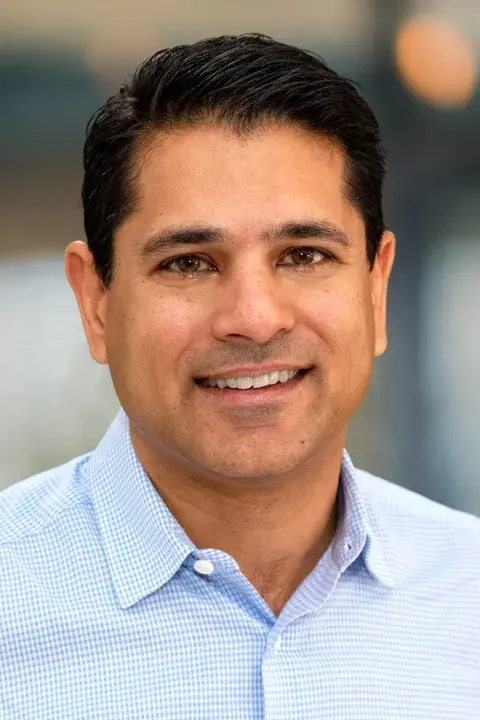
(2nd Row): Déborah Oliveira, Shrimanth Adla, Sam Abadir, Shelly Kramer
This year our judges, in alphabetical order, are:
- Sam Abadir, research director, risk, financial crime & compliance, IDC Financial Insights
Sam Abadir leads global research at IDC Financial Insights on how financial institutions apply analytics, AI, and regulatory technology to manage fraud, risk, and compliance. His work spans AML, KYC, identity verification, and AI governance, with a focus on how financial institutions can align regulatory requirements with intelligent decisioning and operational resilience. Drawing on decades of experience in Big Four consulting, GRC software, and privacy-enhancing technologies, Sam brings a practical perspective on how innovation in fraud detection and compliance can improve customer trust and business performance. He is a frequent speaker on the future of financial crime prevention, advanced analytics, and responsible AI in financial services.
- Shrimanth Adla, senior director, credit risk strategy and analytics, Comcast
At Comcast, Shrimanth Adla leads credit risk strategy and analytics for the internet, cable, Xfinity Mobile, and business mobile portfolios. He brings extensive experience from previous pivotal roles at TransUnion, MUFG Union Bank, Barclays, and Citi in financial risk management. With a background in engineering and data science, Shrimanth is ardent about using advanced AI practices to deliver actionable business intelligence. Shrimanth is widely regarded as a thought leader in credit and risk management, frequently invited to share insights at conferences, panels, and industry forums.
- Manoj Agrawal, group editor, Banking Frontiers
With 30+ years of experience spanning software development, IT leadership, and biz-tech journalism, Manoj Agrawal directs the strategy for editorial and conferences at Banking Frontiers, a leading publication covering business, innovation and digital transformation across financial services. He has previously held editorial roles at Express Computer, ERP Journal, and Digital Age, and is well known for his insights into BFSI business and technology trends.
- Courtney Haan, strategic payments experience product manager, Velera (Previous Winner)
With a career spanning leadership roles in payments and product strategy, Courtney helps shape Velera’s approach to fraud prevention and cardholder engagement. She played a key role in Velera’s transformation using FICO Platform, enhancing fraud alerting and communication for over 700 financial institutions. Her background includes senior roles at FIS, eFunds, and Wildcard Systems, and earlier experience in consumer products marketing. Courtney holds an MBA from the F.W. Olin Graduate School of Business at Babson College and a BA from Colby College, and brings a sharp issuer perspective focused on secure, seamless customer experiences.
- Shelly Kramer, principal analyst at Kramer & Company and theCube Research
Based in the U.S., Shelly Kramer is a principal analyst and co-founder of Kramer & Company, and a senior analyst with theCUBE Research. With more than 25 years of experience in B2B technology, she covers trends in artificial intelligence, customer experience, cloud computing, cybersecurity, and enterprise SaaS. Shelly works closely with enterprise tech vendors on go-to-market and brand strategy, and is a frequent contributor to industry media, research, and events.
- Andy Lawrie, credit risk tech lead at Nationwide Building Society (Previous Winner)
A leader in decision science, credit risk, and financial technology, Andy Lawrie has transformed Nationwide Building Society’s credit decisioning framework by leading its migration to FICO® Platform. This shift centralized decision-making across key product lines, improving efficiency, agility and compliance. Prior to Nationwide, Andy held senior roles at Aviva and Banco Santander, where he developed automated risk models and AI-driven credit assessments. His expertise has helped modernize decisioning systems across Europe.
- Lisa Morgan, technology journalist and contributor at InformationWeek
A seasoned journalist, industry analyst, and content strategist, Lisa Morgan focuses on the business impact of emerging technologies. She contributes regularly to InformationWeek and has also written for The Economist Intelligence Unit and The Washington Post. With a background in journalism and market research, she brings a clear, pragmatic perspective to the complex forces shaping enterprise technology.
- Déborah Oliveira, founder and editor-in-chief at IT Forum
With over 20 years in tech journalism and content leadership, Déborah Oliveira leads editorial strategy, executive engagement, and events at IT Forum, Brazil’s largest technology community platform. She previously held senior roles at Computerworld, CIO, and IDG Now!, reporting on AI, cybersecurity, and innovation. Déborah holds a journalism degree, an executive certification, and an MBA in marketing. Named Brazil’s Best IT Journalist in 2018, she continues to be recognized as a prominent voice in the tech industry and a strong advocate for women in tech.
Awards will be presented in ten categories: AI, Machine Learning and Optimization; Cloud Deployment; Customer Onboarding and Management; Debt Management; Decision Management Innovation; ESG Champion; Financial Inclusion; Fraud Management; FICO Industry Vanguard and Pioneer Award.
Winners will receive recognition at FICO® World, which will be held May 19-22, 2026 at the Signia By Hilton hotel in Orlando, Florida. Winning implementations will be featured in conference activities, and two representatives of each winning company will receive complimentary conference passes.
Last year’s winning firms represented multiple industries and countries worldwide, all with outstanding results: Santander Consumer USA (AI, Machine Learning & Optimization); Lloyds Banking Group & Nationwide (Cloud Deployment); UnionBank & Octane (Customer Onboarding & Management); Telstra (Debt Management); Scotiabank Peru (Decision Management Innovation); E-agro (ESG Champion); PicPay (Financial Inclusion); Velera & Yapi Kredi (Fraud Management); Woolworths Financial Services (Pioneer Award); and iA Financial Group, Santander Brazil & Bradesco (FICO Industry Vanguard Award).
Popular Posts

Average U.S. FICO® Score at 716, Indicating Improvement in Consumer Credit Behaviors Despite Pandemic
The FICO Score is a broad-based, independent standard measure of credit risk
Read more
The GSE Data Is Public. Here's What It Shows About Credit Score Modernization.
Independent Milliman analysis of GSE historical data confirms what anyone can now verify directly: FICO® Score 10T is the most predictive score.
Read more
FICO® Score High Achievers: Is Age the Only Factor?
<p>FICO’s latest research on <a href="http://www.fico.com/en/blogs/risk-compliance/us-credit-quality-rising-the-beat-goes-on/" target="_blank">national FICO® Score distribution</a> shows that US credit quality continues to trend upwards, with an increasing number of consumers scoring in the highest scores ranges. Given that, we decided it was time to refresh our study on “<a href="http://www.fico.com/en/blogs/risk-compliance/infographic-what-does-a-high-credit-scorer-look-like/" target="_blank">FICO® Score high achievers</a>,” where we examine the credit behavioural profiles of consumers with higher credit scores.</p> <p>As expected, our latest study showed that older people generally have higher scores, as has been the case in our <a href="http://www.fico.com/en/blogs/risk-compliance/age-before-beauty-credit-worthiness-before-youth/" target="_blank">past research</a>. This is largely because they have trade lines that have been open longer, which leads to higher scores (assuming the trade lines are in good standing and all other things equal). The most credit savvy among you will remember that length of credit history accounts for roughly 15% of the overall <a href="http://www.myfico.com/CreditEducation/WhatsInYourScore.aspx" target="_blank">FICO® Score calculation</a>.</p> <p>But for younger consumers, it isn’t too helpful to say, “just wait until you are 50 years old, and that will fix things!” Thus, I decided to dive deeper with our analysis, including looking at the credit behavioural characteristics of younger consumers with high FICO® Scores.</p> <p>In this analysis, I looked at credit characteristics for the two highest score bands, 750-799 and 800-850, which have about 16% and 23% of the population, respectively. I further broke this down by looking at the characteristics of the youngest 15% in each group, which occurs at age 29 for the 750-799 group and 43 for the 800-850. We used FICO<strong>®</strong> Score 9 for our analysis, and examined typical variables of the categories that go into the make-up of the score.</p> <p><a href="http://www.fico.com/en/blogs/wp-content/uploads/2016/10/FICO-Score-High-Achiever-table.png"><img class="alignnone size-full wp-image-29367" src="http://www.fico.com/en/blogs/wp-content/uploads/2016/10/FICO-Score-High-Achiever-table.png" alt="fico-score-high-achiever-table" width="715" height="747" /></a></p> <p>Since there’s a lot to dissect in this chart, I’ll highlight a few findings that struck me: <ul> <li><strong>Credit history.</strong> Higher scores are undoubtedly associated with a longer time on file. What’s striking is the higher average time on file for the 800+ group, both overall and for revolving accounts (the most common trade line). Clearly, it helps to start credit use early in life – but that’s not the sole determining factor for high scoring. The younger cohorts in both the 800+ and 750-799 groups have time on file medians significantly less than their older counterparts.</li> <li><strong>New credit.</strong> High credit scorers do, in fact, pursue new credit. We see little variation in months since last trade line opening and last inquiry among all groups observed.</li> <li><strong>Pay on time.</strong> As you might expect, the further in the past the delinquency, the higher the score – and that’s <u>if</u> a delinquency ever happened. 95% of the 800+ people and 72% of the 750-799 group have never been delinquent, which is a striking contrast to the 57% for the total population. The percentages for the younger groups are even higher, especially so for the 750-799ers. Collection items are also scarce for these high scorers. While 23% of the national population have collection items greater than $99, the figures are only 0.5% for the 800+ group and 3% for the 750-799 group. It is clear that, in conjunction with starting a credit file early, paying on time is a key trait of the FICO® Score high achiever.</li> <li><strong>Balance and utilization.</strong> Finally, we look at how credit is being used, focusing on revolving product use. (Since most people only have one mortgage or one auto loan, variation in instalment product figures is minimal and driven by payment history, which is near perfect for high scorers, as we’ve seen.) FICO® Score high achievers tend to have more open revolving accounts. While the % active trades and utilization are generally lower, by no means do high scorers avoid the use of credit products. What drives the difference here is the amount of <u>available</u> revolving credit utilized. The 800+ group is roughly 1/4 of the national median, both in total and on their highest utilized card; they also have lower balances and more cards<em>. </em>The 750-799 group is more active and higher utilized, but still only at 2/3 of the national figures. The young 750-799 group compensate with lower revolving balances and, as a result, lower utilization, which is in line with what we see for the 800+ group.</li> <li><strong>Benchmarks.</strong> I’d like to point out that while this study provides good benchmarks of the typical credit traits of the FICO® Score high achiever, individual credit profiles will vary widely. And keep in mind that when we sort groups of consumers as a whole by different behaviours, some results may look superficially odd. For example, the 800+ band has a longer median average open account time (128 months) than average revolving months on file (140 months).</li> </ul> So, what do we conclude? A huge takeaway is that high scorers don’t have too much in the way of serious delinquencies and negative public record data.</p> <p>In most respects, the young 800+ people are like their peer group. They really only differ markedly in their shorter credit history and higher non-mortgage balance, both of which are a function of life stage. Our results show that you don’t have to be a credit product hermit; these high scorers have more credit cards. The takeaway is to start credit activity early and maintain well-managed and moderate usage.</p> <p>In many ways, the young 750-799 people are more interesting because their age profile is much younger. Their credit characteristics differ more from their peer group, particularly in terms of length of credit history. They compensate by having almost pristine credit records and lower balances.</p> <p>Ultimately, 39% of US consumers are FICO® Score high achievers, which they accomplish by following common-sense credit practices. It ain’t rocket science!</p>
Read moreTake the next step
Connect with FICO for answers to all your product and solution questions. Interested in becoming a business partner? Contact us to learn more. We look forward to hearing from you.